More About This Card
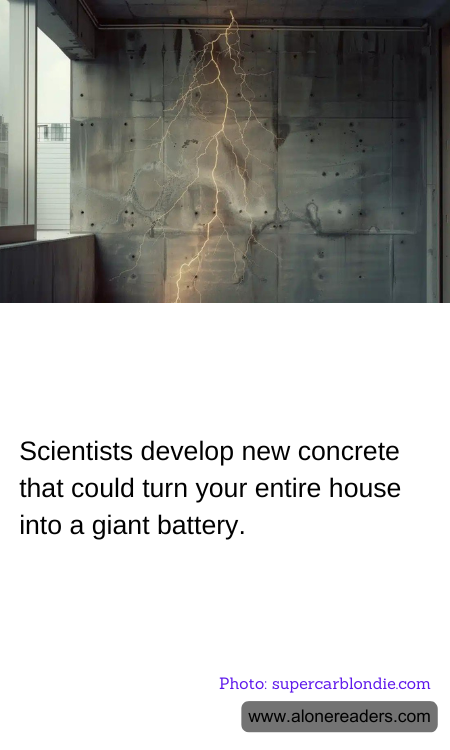
In a groundbreaking development, scientists have created a new type of concrete that not only has the structural capabilities expected of the conventional material but also holds the potential to act as a large-scale battery. This innovative concrete could revolutionize building technology by making every home built with it a part of a vast energy storage system.
The technology, developed by a team of materials scientists and engineers, incorporates specific additives and conductive elements into traditional concrete formulations that enable it to store electrical energy. The key component is a conductive form of carbon, which enhances the concrete's ability not only to store electricity but also to redistribute it back into the home when needed. Essentially, walls, floors, and even ceilings made with this concrete could act as massive batteries, absorbing excess electricity during low demand periods and releasing it during peak times.
This capacity could significantly impact energy management systems globally. Households could potentially become less dependent on external power supplies, particularly benefiting regions with less developed infrastructure. Additionally, this technology could play a crucial role in stabilizing grids in renewable-heavy energy systems by balancing intermittent supply and variable demand.
Moreover, the environmental impact of such a technology could be substantial. By providing built-in energy storage, this concrete could reduce the need for additional battery storage systems, many of which require environmentally costly materials to manufacture. It could also aid in the decarbonization of building sectors by integrating with renewable energy sources, thus further reducing the carbon footprint associated with power generation.
Despite its promising benefits, the technology is still in its developmental stages, and the practicality and economics of this battery concrete on a commercial scale are subjects of ongoing research. Scientists are tackling challenges such as enhancing the efficiency and longevity of the energy storage capability, as well as ensuring the structural integrity of the concrete under various conditions.
If successful, the future could see this smart concrete transforming the construction and energy sectors, turning buildings from passive shelters into active power managing participants. Homes of the future might not only provide safety and comfort but also serve as critical nodes in a more resilient and sustainable energy infrastructure.