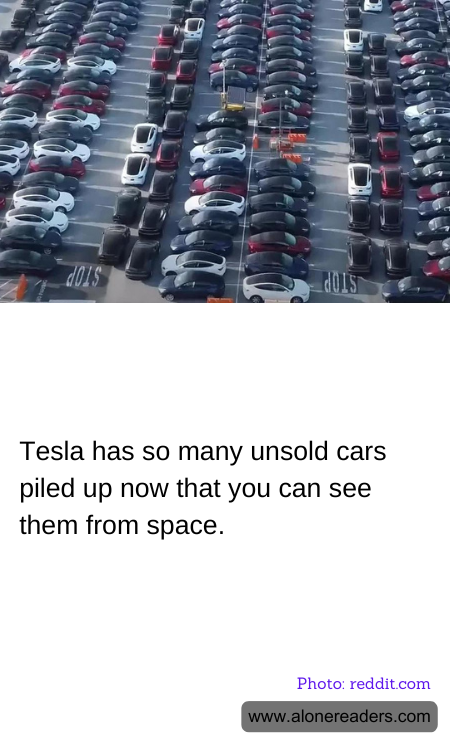
In an unprecedented display of inventory surplus, Tesla has reportedly accumulated a vast number of unsold cars, so extensive that their stockpiles are visible from space. This situation highlights significant challenges within Tesla, known for revolutionizing the electric vehicle (EV) market under the leadership of CEO Elon Musk. The visual proof of these unsold cars, captured via satellite images, underscores a critical disconnect between production rates and actual sales, sparking intense discussions about market demand, production management, and economic foresight.
Tesla's approach has traditionally involved high production outputs to meet perceived demand surges, driven by the growing global shift towards sustainable transportation. However, the accumulation of inventory suggests a miscalculation in demand or perhaps disruptions in the distribution or sales channels. This surplus could be attributed to various factors including economic downturns, increased competition in the EV market, or logistical challenges. Additionally, consumer behavior could be influenced by the broader economic conditions affecting discretionary spending.
The implications of such a stockpile are multifaceted. Economically, Tesla may need to consider slowing production or finding alternative strategies to clear out excess inventory. This could mean strategic discounts or exporting cars to new markets. On the operational front, managing such a significant number of unsold vehicles also involves logistical costs and challenges, from storage to maintenance, ensuring that vehicles remain in sellable condition over time.
Strategically, this situation serves as a crucial lesson in supply chain management and market prediction analytics for Tesla. Adapting to real-time market conditions, improving forecasting models, and perhaps even shifting towards more flexible production methods could be potential moves to align more closely with market demands. Moreover, Tesla's situation might influence other players in the automotive industry, highlighting the need for a delicate balance between innovation, production, and market strategy.
Such a clear visualization of Tesla's challenges also impacts consumer perception and investor confidence. Transparency in addressing the causes of this surplus and strategies for resolution will be key for Tesla to maintain its leadership and trust within the market. As Tesla navigates through these operational hurdles, the overarching goal remains to align its pioneering technological capabilities with the economic realities of the global car market.
