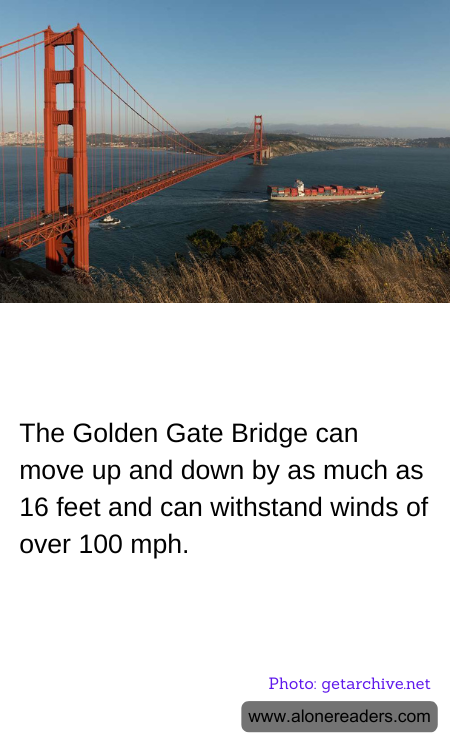
The Golden Gate Bridge, a marvel of modern engineering, exhibits an extraordinary flexibility that allows it to endure the natural forces that constantly bear down upon it. This iconic structure, spanning the strait that connects San Francisco Bay to the Pacific Ocean, can move vertically by as much as 16 feet due to its ingeniously designed suspension system. This degree of movement is crucial for absorbing and dissipating the energy generated by the various stresses the bridge faces, including the weight of the traffic and the environmental forces.
One of the most pressing challenges for any large-scale bridge is the ability to withstand high winds. The Golden Gate Bridge, exposed to the massive winds that sweep across the Northern California coast, can tolerate gusts of more than 100 miles per hour. The bridge's ability to withstand these winds is attributed to its aerodynamic design and the flexibility built into its structure. The towers, cables, and decking are engineered to give just enough to accommodate wind pressures without compromising the bridge's structural integrity.
Such design considerations not only safeguard the bridge from everyday environmental stressors but also ensure its resilience against more severe natural occurrences, like earthquakes. The region's susceptibility to seismic activity has guided much of the design criteria for the bridge. Over the years, retrofitting has been carried out to enhance its seismic resistance, ensuring that it will continue to serve as a vital transportation link and a historical landmark for generations.
The Golden Gate Bridge thus serves as a testament to the foresight and ingenuity of its designers and engineers. Its ability to move with the forces of nature rather than resist them rigidly is a prime example of how dynamic engineering solutions can create structures that blend sustainability with functionality, maintaining an elegant posture against the often harsh environmental tableau of the San Francisco Bay area. The bridge not only stands as a functional piece of the city's infrastructure but also as a symbol of architectural beauty and resilience.
