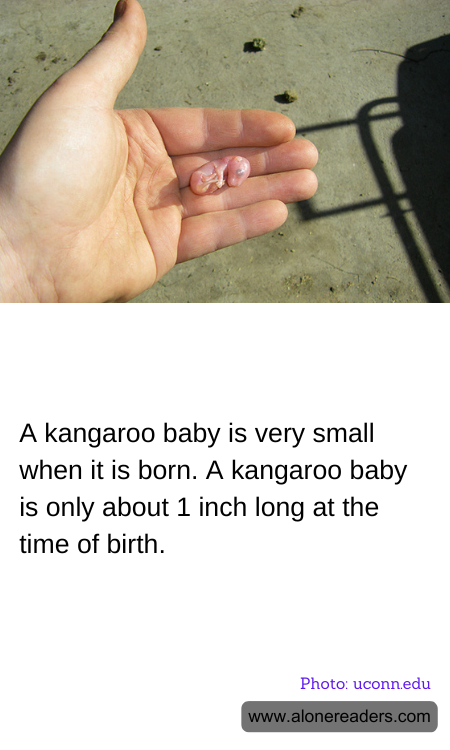
Kangaroo babies, or joeys as they are commonly known, enter the world in an astonishingly underdeveloped state. At birth, a joey is typically only about 1 inch long, roughly the size of a grape. This incredibly small creature, born after a gestation period of just about a month, is essentially blind, hairless, and earless. Its early developmental stage is necessary due to the unique reproductive process of marsupials, which includes a second phase of gestation taking place outside the womb in the mother's pouch.
After the birth, the tiny joey must undertake a perilous journey from the birth canal to the safety of its mother's pouch. This journey, although short, is fraught with challenges due to the joey's underdeveloped state. Using its relatively strong forelimbs and an innate sense of direction, the newborn painstakingly climbs into the pouch where it immediately latches onto a teat. This teat then expands in the joey’s mouth, securing it in place and ensuring that it does not become detached from its source of nutrition.
Once safely ensconced in the pouch, the joey continues its development over the course of several months. During this time, it begins to develop fur, eyes, and ears. The pouch environment is critical not only for the physical development but also for the immune protection, as the mother’s pouch provides antibodies through her milk. The joey will generally stay in the pouch for about six to seven months before starting to venture outside for short periods. Full independence comes much later, usually around a year after birth, when the young kangaroo is finally ready to leave the pouch for good.
Kangaroo reproduction and early development vividly demonstrate remarkable evolutionary adaptations that have enabled these animals to thrive in the often harsh, unpredictable climates of Australia. The survival strategy of birthing a highly underdeveloped neonate reduces the metabolic demands on the mother during gestation, which is especially vital in an environment where food and water can be sparse. By transferring much of the developmental process to the protected environment of the pouch, kangaroos ensure that their offspring can grow in a relatively stable, controlled environment, enhancing their chances of survival in the rugged landscapes of their natural habitat.
