More About This Card
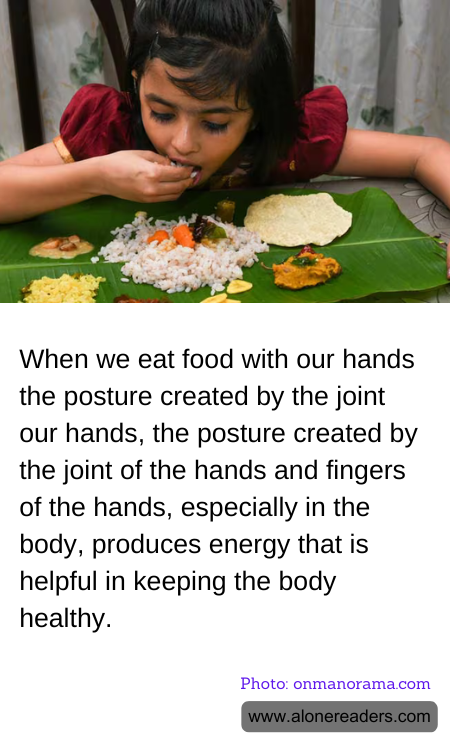
Eating food with our hands is not only a cultural practice prevalent in many parts of the world but also carries potential health benefits that are often overlooked in modern, utensil-using societies. The act of eating with our hands involves a more intimate physical and sensory interaction with food, engaging not just the sense of taste but also that of touch. This tactile connection can help enhance the overall eating experience and promote a more mindful approach to food consumption.
Moreover, the posture and mechanics involved in eating with hands can be beneficial for the body. When food is eaten with hands, the fingers and palms form a unique configuration and create gentle pressure at several neural points connected to various body functions. For example, it's believed in Ayurveda—an ancient Indian system of medicine—that each finger is an extension of one of the five natural elements. By eating with the fingers, these elements are thought to be activated, which helps in bringing forth digestive juices in the stomach, thus improving digestion.
The tactile feedback from eating with hands is also thought to contribute to better portion control. The hand-to-food contact helps gauge the temperature, texture, and consistency of food, allowing for a more controlled and measured eating pace, rather than the mechanical action of just cutting and bringing food to the mouth using utensils. This can lead to better chewing and saliva production, which are crucial for the initiation of the digestive process.
Furthermore, the direct hand-to-food contact may promote a connection to the food that can enhance digestion from a psychological viewpoint. Feeling the texture, temperature, and firmness of the food can prepare the body physiologically for digestion and absorption. It’s also suggested that this practice helps in grounding one's body and makes the eating experience more centered and grounded.
In conclusion, while the scientific community may not fully endorse all the claimed health benefits of eating with hands, there are certainly aspects of this practice that can potentially lead to a healthier relationship with food. From promoting digestion through tactile stimulation to contributing to mindful eating by engaging multiple senses, there is more to this practice than might meet the eye. As we move toward a more global understanding of health and wellness, incorporating such traditional wisdom could be beneficial, provided it aligns with individual health needs and contexts.