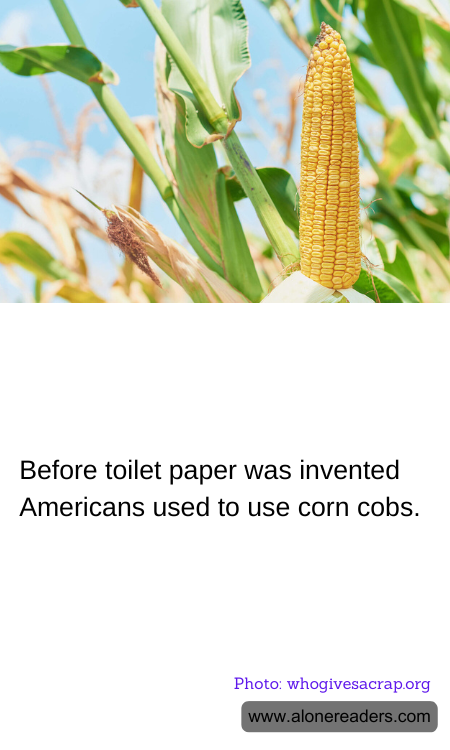
Before the advent of toilet paper, the methods and materials people used for personal cleaning might seem unusual or even uncomfortable by today's standards. Among these early methods, American settlers had a particularly unique approach: using corn cobs. Corn, a staple crop and integral part of life on American farms, offered not only nutrition but one of the earliest forms of toilet tissue in the region.
Corn cobs, readily available after the harvest, were used extensively in rural America before the widespread availability of manufactured toilet paper. The use of corn cobs for personal hygiene can be traced back to a time when recycling and utilizing available natural resources was a necessary way of life. After the kernels were removed and the cobs were left as a byproduct, these agricultural remnants served a practical purpose. The cob, with its firm and somewhat fibrous texture, was effective enough to serve the purpose, and the size and shape made them relatively easy to use.
This practice might sound harsh to modern sensibilities accustomed to soft, multi-ply tissue options, but for many American settlers, it was simply a part of daily life. The cobs were often kept in a container near the privy or outhouse, and once used, they were disposed of in a manner that predated more contemporary plumbing and sewage systems.
As the 19th century progressed, commercially available toilet paper began to replace more rustic methods. Joseph Gayetty is credited with inventing the first commercially packaged toilet paper in 1857, which marked a significant change in personal hygiene practices. Gayetty's product, which initially featured aloe-infused sheets of manila hemp dispensed from boxes, promised a sanitary and disposable alternative to the previously employed reusable methods.
The transition from corn cobs to manufactured toilet paper was gradual but permanent. As toilet paper became more affordable and widely available, it brought about significant changes in personal hygiene that echoed societal shifts towards industrialization and disposability. Today, while the use of corn cobs has long since been abandoned in favor of more comfortable and sanitary options, the history of its use reveals much about the resourcefulness and adaptability of early American life. This peculiar historical tidbit is a reminder of how far technology and everyday comforts have evolved, transforming an often-overlooked aspect of daily routines into a taken-for-granted modern convenience.
