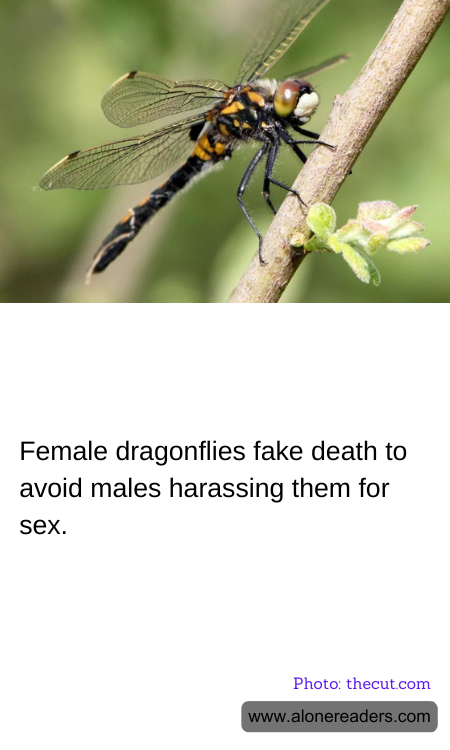
In the intriguing world of animal behavior, female dragonflies have developed a dramatic tactic to deal with unwanted suitors: they fake their own death. This extreme strategy highlights the lengths to which female dragonflies will go to avoid harassment from male counterparts during mating season. This phenomenon, particularly observed in the species known as the moorland hawker, underscores the intense selective pressures these females face during the breeding period.
The moorland hawker dragonfly, which is widespread across Europe and Asia, has an unusual mating system in which males aggressively guard females with whom they have mated to prevent other males from mating with her. However, it's before this mating occurs that females are often bombarded with aggressive advances from multiple males. In response to this relentless pursuit, female dragonflies employ a unique method of evasion: playing dead. When a male approaches, the female dragonfly will suddenly plummet from the air, crash-landing into the ground where she remains motionless until the male departs.
Researchers observing these behaviors noted that the tactic is remarkably effective. Males typically lose interest once the female is on the ground, presumably believing her to be dead or injured, which illustrates a crucial aspect of animal behavior known as selective advantage in predator avoidance. This feigning death not only helps in evading current pursuers but also potentially reduces the risk of physical harm that could arise from these forceful interactions.
Such deceptive tactics are a testament to the evolutionary arms race between the sexes, where survival and reproductive success drive the development of ever more sophisticated strategies to deal with environmental pressures. In the case of the dragonfly, faking death allows the female to maintain control over mating choice, enabling her to select a time and mate that best ensures the survival and quality of her offspring.
The dragonfly's behavior provides a poignant example of the complex interplay between survival and reproductive strategies in the animal kingdom. It also raises interesting questions about consent and choice in nature, providing yet another dimension to the already fascinating study of animal behavior. As researchers continue to explore these unique behaviors, they uncover more about the ecological and evolutionary implications of such interactions, which in turn enriches our understanding of the natural world.
