More About This Card
Mad cow disease, also known as Bovine Spongiform Encephalopathy (BSE), is a chronic, degenerative disorder that affects the brain and central nervous system of cattle. This disease has garnered significant attention not only because of its impact on cattle but also due to its potential to affect humans in the form of variant Creutzfeldt-Jakob disease (vCJD) when infected beef products are consumed.
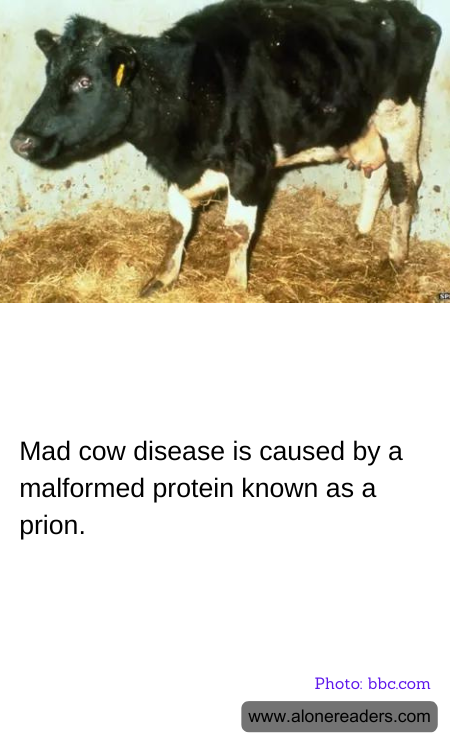
Mad cow disease is caused by an infectious agent identified as a prion, which is a type of protein that can trigger normal proteins in the brain to fold abnormally. Prions are an unusual and particularly insidious type of infectious agent because they are resistant to methods that would normally destroy pathogens, such as heat and radiation. Unlike viruses or bacteria, prions contain no genetic material; they are composed solely of protein.
The mechanism behind BSE involves the transformation of the normal prion protein (PrPc) into a misfolded form (PrPSc). This abnormal form accumulates in the brain, forming clumps that disrupt normal brain functions. As the disease progresses, it leads to death of brain cells, and the brain tissue develops sponge-like holes, giving rise to the term "spongiform." Affected animals exhibit changes in temperament, such as nervousness or aggression, abnormal posture, incoordination, and difficulty standing or walking, all of which worsen over time until the animal eventually dies.
Discovery of mad cow disease dates back to the 1980s in the United Kingdom, where it quickly became a crisis in the cattle industry, leading to the destruction of millions of cattle to contain the spread of the disease. The epidemic was largely attributed to the practice of feeding cattle meat-and-bone meal that contained remnants of infected animals, a practice that has since been banned in many countries.
Mad cow disease shook consumer confidence in beef products because of its association with vCJD, a condition similar to classic Creutzfeldt-Jakob Disease but occurring in younger patients. vCJD can develop in humans after consuming the infected meat from cattle with BSE. Linked to fatal brain damage, early symptoms of vCJD include psychiatric symptoms, behavioral changes, pain, and memory disturbances, developing into full neurological decline.
Though BSE is less common today due to stringent regulations and surveillance practices in the cattle industry, instances still occasionally emerge, keeping investigations around prion diseases active. Research into prions not only aims to prevent further cases of BSE and vCJD but also investigates other prion diseases like scrapie in sheep and Chronic Wasting Disease in deer, offering valuable insights into these mysterious and devastating diseases.