More About This Card
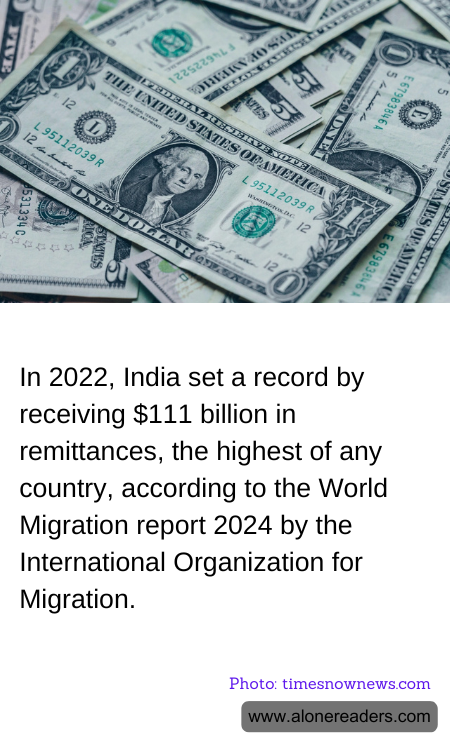
India achieved a historic milestone in 2022 by receiving $111 billion in remittances according to the World Migration Report 2024, released by the International Organization for Migration (IOM). This figure is the highest recorded by any country in the world, highlighting India's significant role in the global economy. The influx of remittances has predominantly been fueled by the Indian diaspora, which includes millions of migrants working overseas, particularly in the United States, the United Arab Emirates, the United Kingdom, Canada, and Australia.
Remittances have proven to be a crucial source of financial inflow for India, surpassing foreign direct investment. This influx of funds plays a critical role in the nation's economy by supporting consumption and investment in various sectors. Families receiving these funds often use them for education, healthcare, and general household improvements, which contribute significantly to the socioeconomic development of the country. Additionally, these remittances also provide a safety net for many families, cushioning them against financial instabilities.
The continuing growth in remittance flows to India reflects broader demographic trends, including growing Indian communities abroad and increased professional mobility among Indian nationals. Furthermore, advancements in digital payment technologies and a reduction in transfer costs have also made it easier and cheaper for the Indian diaspora to send money home. These factors, combined with policies aimed at encouraging the engagement of the Indian diaspora, have helped sustain and increase remittance flows.
The significant amount of remittances also highlights the importance of diaspora relations in India's foreign policy and economic strategy. The government has taken various initiatives to engage with its diaspora and capitalize on this important source of foreign income. Programs and plans aimed at facilitating investments, philanthropy, and even return migrations are being continuously developed.
As India continues to receive these substantial financial inflows, the challenge remains to effectively leverage these funds for sustainable development. Ensuring that remittances contribute to long-term growth, without solely driving consumption, will be crucial for the overall health of the economy. There is also a need to address potential economic disparities that may arise from uneven distribution of these remittances across different regions and social groups within the country.