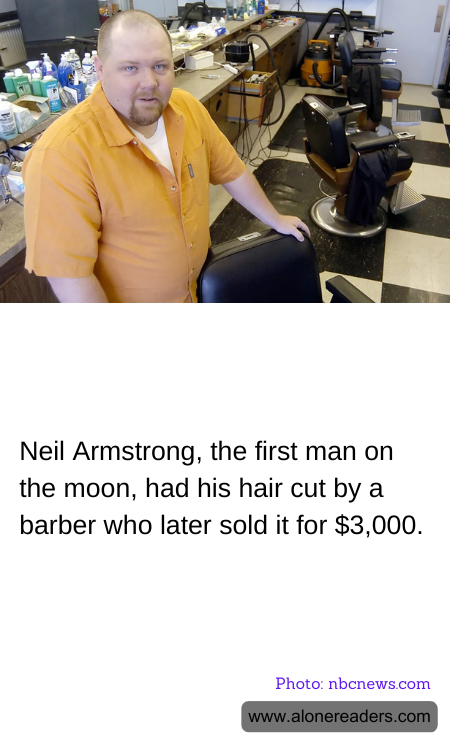
Neil Armstrong, renowned globally as the first human to set foot on the moon, inadvertently became the center of a peculiar and somewhat controversial incident involving his hair. After his historic moon landing in 1969, Armstrong, like any other individual, went to his barber for a routine haircut. However, the situation took an unusual turn when the barber decided to keep Armstrong's hair clippings instead of disposing of them as would be customary.
These hair clippings soon emerged on the market, fetching an astonishing $3,000. This act of selling someone's hair without their permission led to a significant legal and ethical debate. Neil Armstrong, who had not consented to the sale or use of his biological material, was understandably displeased. The notion that someone could profit from a part of his physical being without consent highlighted issues of personal privacy and the exploitation of public figures’ personal lives for commercial gain.
The buyer, keen on owning a piece of history associated with the legendary astronaut, likely saw the hair clippings as a unique piece of memorabilia. Nonetheless, the situation underscored the complexities surrounding fame and the lengths to which individuals might go to own a part of history, irrespective of the ethical implications.
Eventually, Armstrong took legal action against his barber to reclaim his hair or, at least, to assert control over the use of his personal belongings or body parts. The case brought to light the need for clear guidelines and laws that protect individuals’ rights over their own biological materials, even if they are public figures. The incident also prompted discussions about respect and dignity, reinforcing the idea that personal artifacts, no matter how trivial they might seem, belong to the individual and their consent is paramount before any commercial use.
Thus, while Neil Armstrong’s moon landing remains a symbol of human achievement and exploration, the story of his hair being sold reminds us of the ongoing challenges public figures face regarding privacy and the commodification of personal history.
