More About This Card
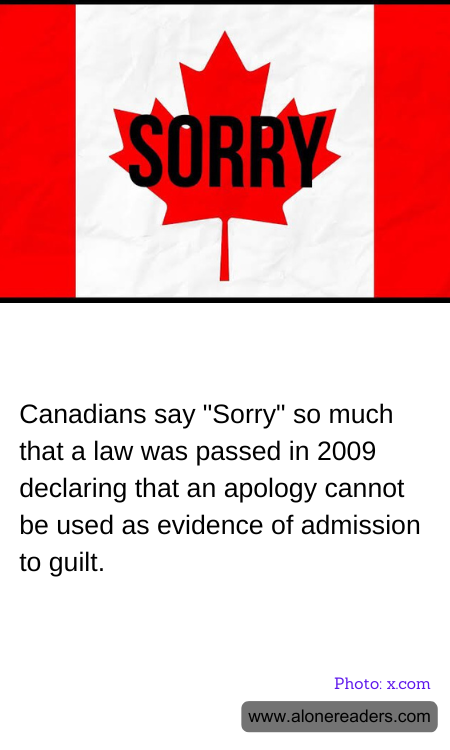
In Canada, the stereotype of Canadians as constant apologizers isn't just folklore, it's somewhat enshrined in law. The penchant for saying "sorry" is so ingrained in Canadian culture that it prompted legislative action to clarify its implications. In 2009, the "Apology Act" was passed in Ontario with the aim to legally differentiate the compassionate or polite use of "sorry" from an admission of guilt. This was a significant move, considering the legal environments where every word can be scrutinized and potentially used against someone in a court of law.
The Apology Act specifically states that an apology does not constitute an express or implied admission of fault or liability by the person making it; instead, it merely expresses sympathy or regret about the situation, without admitting fault or opening the door to liability. This is particularly important in civil cases, where the intentions behind an apology could be misconstrued as an admission of liability or wrongdoing.
The passing of this law highlights an interesting cultural acknowledgment that the typical Canadian demeanor—that often includes frequent apologies—is at odds with the blunt realities of legal disputes. It underscores a broader societal value on politeness and civility, something that is culturally cherished in Canada. Furthermore, the law facilitates a more open emotional exchange by allowing individuals to express regret without fear of legal repercussion, encouraging a culture of resolution and dialogue that does not necessarily parallel legal blame.
This legislation not only showcases a unique aspect of Canadian social etiquette but also speaks to the legal system's flexibility in adapting to cultural norms. Similar laws have been considered or enacted in other parts of the world, reflecting a growing recognition of the complex role that language and cultural expressions play in legal contexts. By separating compassion from culpability, the Apology Act provides a legal safeguard for one of Canada’s most characteristic social nuances, preserving the Canadian way of being polite without the risk of unintended legal consequences.