More About This Card
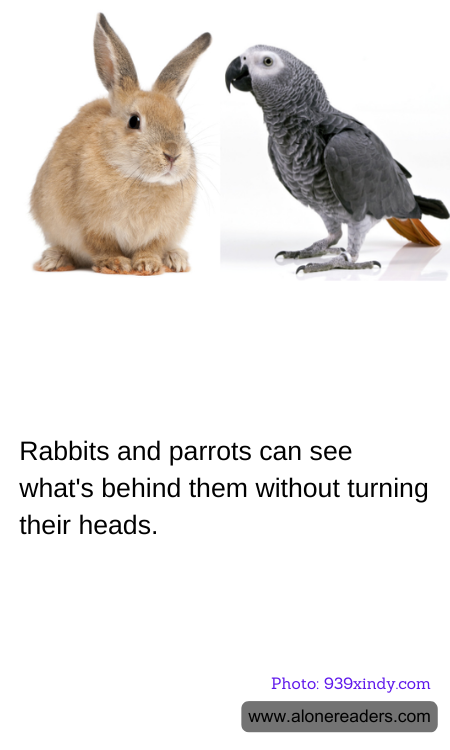
Rabbits and parrots, two seemingly different creatures, share an intriguing visual ability that adds an interesting dimension to their behavior and survival strategies. Both animals possess a unique field of vision, allowing them to see what's behind them without the need to turn their heads. This remarkable trait helps them evade predators and navigate their environments more effectively.
Rabbits, known for their vigilance, have large, bulging eyes that are positioned on the sides of their head. This placement grants them a nearly panoramic view of their surroundings. A rabbit's field of vision spans about 360 degrees, which means they can see in front, beside, and almost completely behind themselves. This wide-angle vision is crucial for detecting predators which might creep up from various directions. The only blind spot for a rabbit is a small area right in front of their nose and behind their ears. However, their ability to remain still and their excellent hearing usually compensate for this vulnerability.
Parrots, on the other hand, are birds that are not only admired for their vivid colors and intelligence but also for their visual prowess. Like rabbits, parrots have eyes located more towards the sides of their head, giving them a broad visual field. Although not quite 360 degrees, their field of vision is expansive enough to see behind themselves and detect any threats or changes in their environment. This trait is particularly advantageous for parrots living in the wild, where threats can come from all directions, including from predatory birds swooping down from the sky.
The way parrots and rabbits are able to monitor their surroundings without turning their heads is vital for their survival. For the preyed-upon rabbit, every second counts, and being able to spot a predator quickly can be the difference between life and death. Meanwhile, parrots use their vision to manage social interactions within their flock and keep an eye out for predators while foraging or nesting in trees.
Interestingly, this visual capacity also influences the behavior and social dynamics of these animals. In rabbits, their wide field of view means they often rely more on vision than scent when determining the proximity of others or assessing threats. Parrots, social and communicative, may use their visual capabilities to interact with and recognize flock members, asserting social hierarchy or bonding.
In conclusion, the ability of rabbits and parrots to see behind them without turning their heads is a testament to the diverse and fascinating adaptations in the animal kingdom. These adaptations not only help these animals avoid predators but also shape their social behaviors, proving once again how wildlife continues to evolve in response to ecological pressures.