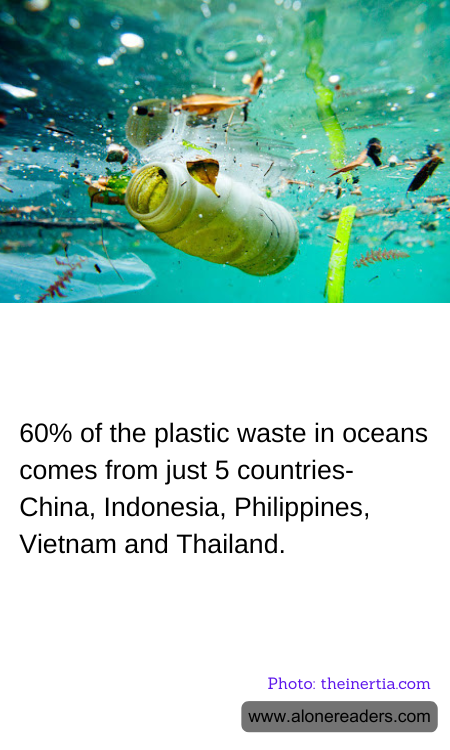
Plastic waste in the oceans has become one of the most pressing environmental issues of our time, affecting marine ecosystems, wildlife, and human health. Alarmingly, 60% of the plastic debris that pollutes our oceans is contributed by just five countries: China, Indonesia, Philippines, Vietnam, and Thailand. This statistic highlights a significant concentration of marine plastic pollution in specific areas primarily due to the rapid development and urbanization in these countries, which often outpaces waste management infrastructure improvements.
China, being the most populous and one of the fastest-growing economies in the world, leads the list. The sheer volume of waste generated by its vast population, combined with inadequate waste management systems, results in a major portion of plastic ending up in the ocean. Similarly, Indonesia, the Philippines, Vietnam, and Thailand, with their extensive coastlines and dependence on marine resources, face the challenge of managing the plastic waste that accompanies economic growth and urban sprawl.
The reasons behind this overwhelming contribution to oceanic plastic pollution are multifaceted, involving economic, social, and regulatory components. These countries have vibrant markets that rely heavily on plastic for packaging consumer goods. Meanwhile, public awareness and cultural norms regarding recycling and waste management are still in development, and enforcement of environmental regulations can be inconsistent. In addition to domestic challenges, these nations have also become importers of foreign waste, complicating their waste management landscape.
The consequences of this pollution are dire. Marine species ingest or become entangled in plastic debris, leading to injury and death, and plastic particles eventually make their way up the food chain to humans. Beaches littered with plastic waste hinder tourism, a vital economic activity for these coastal nations. Recognizing the gravity of this issue, international bodies, along with non-governmental organizations, are stepping up efforts to aid these countries in enhancing their waste management systems.
Efforts to tackle this monumental problem include improving waste infrastructure, enhancing public awareness campaigns about the impacts of plastic pollution, and investing in new technologies for recycling and waste reduction. Biodegradable alternatives to common plastic items are being developed and slowly integrated into the market. Moreover, global initiatives like the United Nations’ Clean Seas campaign are working together with governments and regional partners to set regulations and frameworks aimed at reducing marine debris.
Understanding the significant role these countries play in the polluting of our oceans is crucial in mitigating future harm. By addressing the issue through international cooperation and sustainable practices, there is hope for significant reductions in oceanic plastic waste, safeguarding marine environments for future generations.
