More About This Card
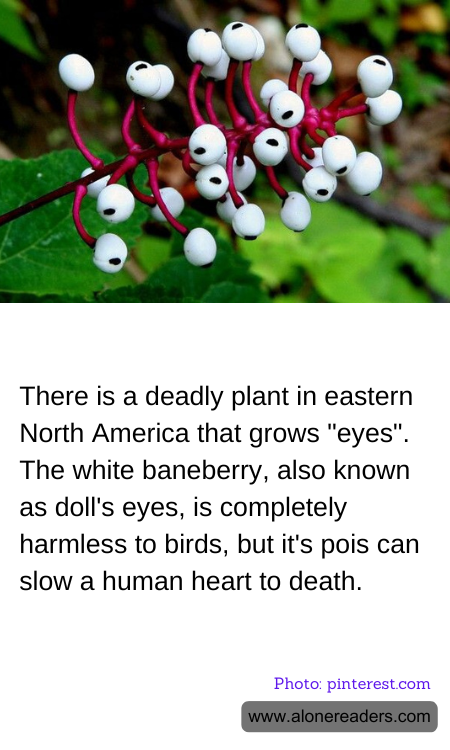
The white baneberry, a plant native to eastern North America, presents an eerie yet fascinating aspect of nature with its distinctive berry formation that strikingly resembles human eyes. Commonly referred to as "doll's eyes" due to the stark white color of its berries with a contrasting black stigma that mimics the pupil, this plant harbors more than just an unusual appearance; it possesses deadly toxic components that can be lethal to humans.
Botanically known as Actaea pachypoda, white baneberry thrives in forested environments favoring the damp, shadowy understory where it can often be found adorning the woodland floor. Its alluring fruits set on a backdrop of thick, lush green foliage, and spirited white flowers radiate an aesthetic charm. Nonetheless, the beauty of the white baneberry belies the danger it poses.
Although the berries are highly toxic to humans, interestingly, they cause no harm to birds. Birds play a crucial role in the ecology of white baneberry by aiding in the dispersal of its seeds. This mutual benefit underscores a vital ecological relationship: while the berries provide a food source for avian species, the plant benefits from the transportation of its seeds, facilitating propagation and survival.
For humans, however, ingesting even a small quantity of the berries can lead to severe consequences. The plant contains cardiogenic toxins which can have an immediate sedative effect on human cardiac muscle tissue, rapidly slowing the heart and potentially leading to cardiac arrest. Symptoms of poisoning by doll's eyes can include dizziness, severe stomach cramps, headache, and hallucinations, often culminating in death if medical intervention is not promptly received.
Despite its danger to humans, the plant is sometimes used in ornamental gardening for its unique visual appeal and its ability to thrive in shaded areas where other plants might not. Gardening enthusiasts who opt to include white baneberry in their plant selections are advised to handle the plant with care and ensure it is located out of reach of children and pets due to its toxic nature.
While white baneberry's menacing potential can not be underestimated, it remains a captivating specimen illustrating the dual aspects of natural beauty and natural peril. Like many elements of wild nature, the white baneberry commands respect and prompts an appreciation for the complex interactions within ecosystems, serving as a stark reminder of the fine line between botanical allure and danger.