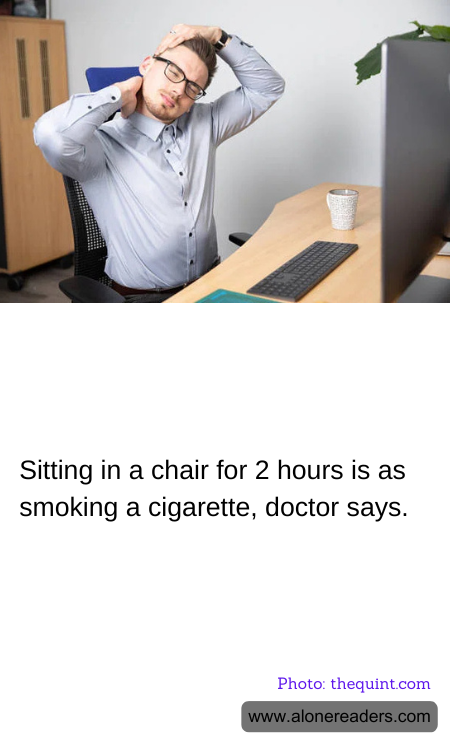
In today’s fast-paced world, where sitting for prolonged periods has become normative, especially for those working in office environments, a striking comparison has emerged from the medical community. A doctor has recently likened sitting in a chair for two hours to smoking a cigarette, underscoring the severity of sedentary behavior on our health.
This assertion aims to heightened awareness of the 'sitting epidemic' as a key factor contributing to global health issues, much like smoking has been for decades. The parallel drawn between sitting and smoking is grounded in the similar chronic diseases they can promote. Extended sitting has been linked to increased risks of heart disease, diabetes, obesity, and even early mortality, mirroring some serious consequences of smoking.
The mechanism through which prolonged sitting affects our health involves various physiological processes. When we sit for extended periods, our muscle activity drops considerably, leading to a decrease in metabolism. This can affect the body’s ability to regulate blood sugar, break down body fat, and maintain healthy blood pressure levels. Over time, these effects can accumulate, leading to significant health issues.
Moreover, poor posture and the lack of movement can contribute to skeletal and muscular disorders, including back pain, muscle degeneration, and joint problems. This comparison further illustrates the silent, creeping impact of sedentary habits, akin to the insidious nature of smoking-related health issues that manifest over time.
To counteract these risks, health professionals recommend incorporating more physical activity into daily routines, emphasizing that even small, frequent breaks from sitting can mitigate these risks significantly. Simple actions such as standing or walking for a few minutes every hour can improve blood circulation, enhance metabolism, and reduce the impacts of prolonged sitting.
By presenting sitting as potentially as harmful as smoking, it intensifies the call for a shift in how we view and organize our daily activities, emphasizing the need for a more dynamic lifestyle as integral to our health regime. This bold comparison serves as a critical reminder of the importance of regular physical activity and movement, irrespective of one’s fitness level or age. It’s a call to action that sitting less and moving more is not just a lifestyle choice but a health necessity, parallel to quitting smoking.
