More About This Card
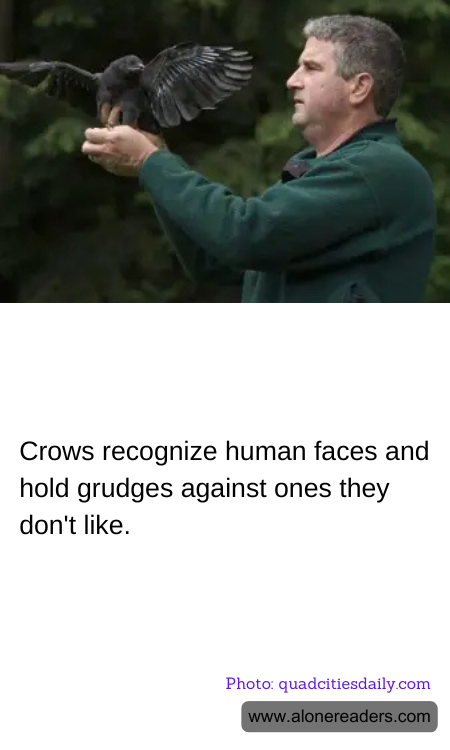
Crows are among the most intelligent birds in the animal kingdom. They possess a remarkable ability to recognize human faces and even hold grudges against individuals they perceive as threats. This ability to distinguish and remember human faces is a fascinating aspect of their intelligence, underscoring the complex interactions between humans and wildlife in urban environments.
Research has shown that crows have excellent memory capabilities, which help them in identifying not only other crows but also individual humans. Studies, particularly the one conducted by scientists at the University of Washington, have demonstrated that crows can remember the face of a person who poses a threat to them and react aggressively when they encounter that person again, even after a significant amount of time has passed. This behavior is likely an adaptive trait that helps the birds avoid potential dangers, ensuring their survival.
The study involved wearing masks by researchers while they captured and released wild crows. The researchers noted that the crows would subsequently scold humans who wore the same masks, indicating recognition. Intriguingly, the crows would also bring in other crows to join in rebuking the disliked face, showing a kind of ‘community watch’ behavior. This group response suggests not only individual learning but also social learning capabilities.
Interestingly, crows not only react to negative experiences with humans but can also remember those who are kind to them. There are anecdotal accounts of crows bringing gifts like twigs, shiny objects, or even food to the humans who feed them regularly or treat them with kindness.
These findings highlight the need for a better understanding of the ways we interact with animals in urban settings. The intelligence exhibited by crows in recognizing and remembering human faces should prompt us to consider how our behaviors could impact not just crows but other wildlife that share our cities. Furthermore, the ability of crows to communicate with each other regarding threats and potentially coordinate with extensive networks demonstrates a level of social sophistication that is quite remarkable.
This knowledge mandates a reformative perspective on urban wildlife, urging for more respectful and positive interactions, considering the long memories these animals have. Ignorance or maltreatment can lead to negative consequences not just for the offending individual but potentially for the broader human community interacting with these smart birds.