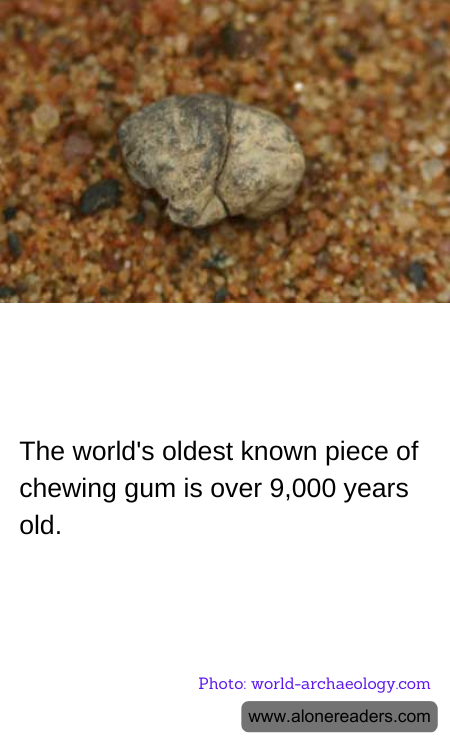
Chewing gum, a common modern-day treat, has a historical legacy that stretches much further back than many might assume. The world’s oldest known piece of chewing gum is over 9,000 years old. This ancient sample offers not only a startling revelation about prehistoric habits but also insights into the early uses of natural substances.
The oldest known gum was discovered in Kierikki, Yli-li, Finland, and is made from birch bark tar. Historical analysis shows that prehistoric people used this type of gum for a variety of purposes. Primarily, it was valued for its antiseptic properties and was possibly used to treat gum infections. Additionally, it served a practical function in society; birch bark tar contains phenols, which are antiseptic compounds that would help with oral health.
Interestingly, the ancient gum also contains tooth imprints, suggesting that it was chewed. This aligns with the idea that chewing birch bark tar was a method for cleaning teeth and gums, and even as a primitive toothache remedy. Beyond health-related uses, it is also thought that birch bark tar was used as a glue for repairing pottery or for fastening tools and weapons, highlighting its importance in day-to-day activities.
Moreover, the discovery of such ancient gum has provided genetic information about the people who chewed it. Analysis of the DNA remnants in the gum has given researchers insights into the diet and microbiomes of prehistoric populations, paving the way for a deeper understanding of their living conditions and interactions with their environment.
So, while today's gum is generally used for enjoyment and perhaps casually discarded, chewing gum has deep historical roots that reflect its importance in the survival and evolution of human societies. The fact that we can study and learn from something as simple and mundane as a piece of old gum is a testament to the complexity of human history and the interrelationship between human culture and the natural world.
