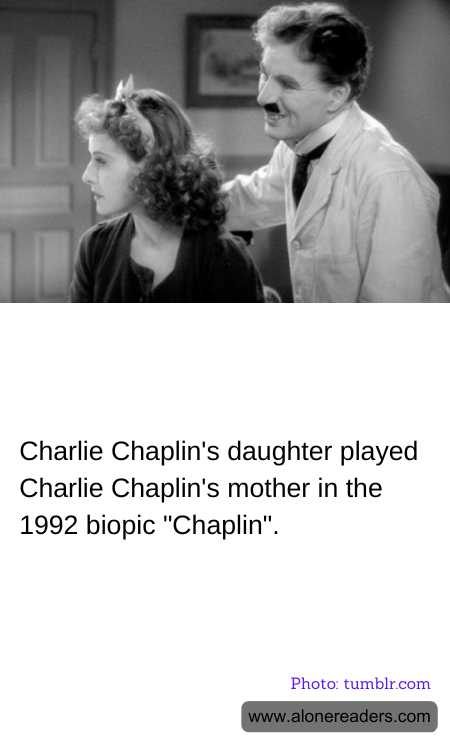
The world of film is often filled with intriguing connections and surprising roles that link actors in unique ways. One such fascinating instance is found in the 1992 biographical film “Chaplin,” directed by Richard Attenborough. The film features an intriguing case of casting where Charlie Chaplin's own daughter, Geraldine Chaplin, plays the role of her real-life grandmother, Hannah Chaplin, who was Charlie's mother. This casting choice adds a layer of depth and authenticity to the portrayal, bridging generations both on and off the screen.
Geraldine, an accomplished actress in her own right, delivers a poignant performance that captures the complexities of Hannah's character—a woman who faced numerous struggles, including poverty and mental health issues, yet had a profound influence on her son's life and career. Charlie Chaplin, portrayed by Robert Downey Jr. in an Oscar-nominated performance, is depicted navigating his tumultuous journey from a young performer in the British music halls to his rise as a global icon in silent film. The portrayal of Charlie's relationship with his mother is central to understanding his emotional and artistic development.
Casting Geraldine Chaplin to play her grandmother serves multiple functions. It brings an authentic touch to the film, as she presumably brings personal insights and emotional depth to the role that might otherwise be less accessible to another actress. Moreover, it acts as a bridge between her father's public legacy and private life, giving viewers an intimate glimpse into the familial relationships that shaped him.
This casting decision also highlights the enduring legacy of the Chaplin family in cinema. It underscores a continuity in the world of acting and film, reminding the audience of the real human connections that often underpin the roles portrayed on screen. The film itself was well-received and remains notable not only for its performances and Richard Attenborough's direction but also for its thoughtful exploration of the impact of family and early life experiences on personal and creative development.
In “Chaplin,” the meta-casting of Geraldine Chaplin thus enriches the narrative, offering a tender and nuanced look at a family that faced both staggering challenges and remarkable successes. Through her portrayal, the viewer is afforded a rare continuity of the Chaplin legacy, seen through the lens of not just the characters, but the real-life familial ties that bind them.
