More About This Card
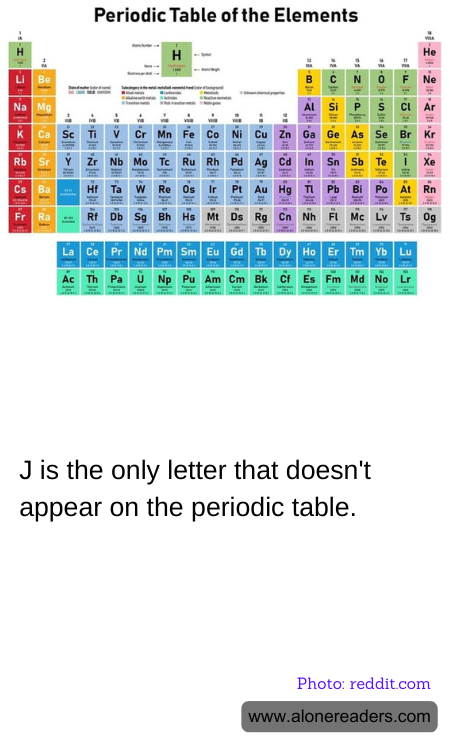
The periodic table, a comprehensive layout of all known chemical elements, organizes each based on their atomic number, electron configuration, and recurring chemical properties. Among the many fascinating facts about this scientific staple is the curious absence of the letter "J" in the element symbols. This omission stands out, especially considering that the alphabetical spectrum from "A" to "Z" is otherwise well-represented in the symbols used to denote these fundamental components of matter.
The reasons for the absence of "J" trace back to the historical and linguistic origins of the element names. Many of the names and corresponding symbols of elements derive from Latin and Greek, reflecting the languages' extensive use in the sciences during the time many elements were discovered and named. In Latin, the letter "J" is a later variant of the letter “I” and was used interchangeably in the early days, primarily evolving in usage to help differentiate vowel sounds and consonant sounds in the medieval period. Thus, many ancient texts and subsequent scientific vocabulary, including the nomenclature for elements, were already established using the earlier forms of the alphabet that did not distinctly include "J."
Moreover, several elements have symbols that do not necessarily correspond to their English names. For instance, gold is represented by "Au" from its Latin name "aurum", silver by "Ag" from "argentum", and sodium by "Na" from "natrium". This trend showcases the tradition of sourcing names from historically scientific languages, which, again, did not prominently feature "J" in their alphabets or scientific lexicons at the time.
Interestingly, the exclusion of "J" from the periodic table is a unique linguistic and cultural fingerprint reflecting the evolution of scientific language and its roots in classical scholarship. It underscores how science, while universal in its aims, is nevertheless influenced by the specific historical and cultural contexts in which it develops. This absence also highlights the dynamic nature of scientific language and taxonomy, influenced by a blend of legacy, convention, and practical communication across the global scientific community.