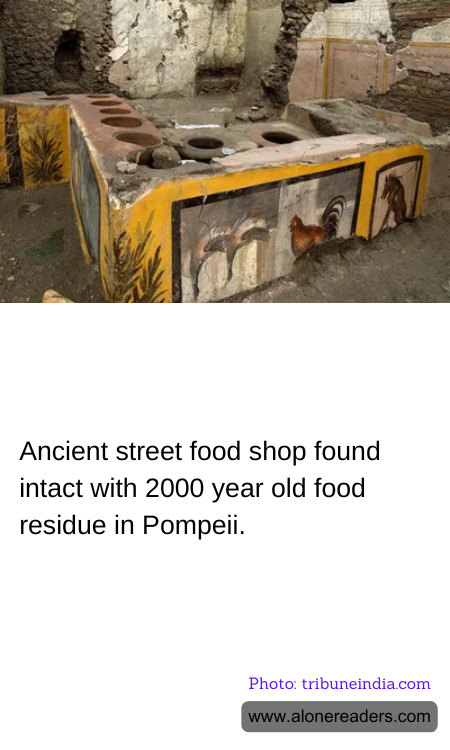
In the ancient city of Pompeii, renowned for its archaeological treasures, a remarkable discovery was made—a street food shop, known as a thermopolium, which was preserved under layers of volcanic ash from the eruption of Mount Vesuvius in 79 AD. This rare find provides an extraordinary glimpse into the daily life and eating habits of the Pompeiians.
The thermopolium, essentially the Roman equivalent of a fast food restaurant, was found to be remarkably intact, with vibrant frescoes still visible on its walls, depicting the very foods that were likely sold there. These frescoes included images of two upside-down ducks, a rooster, and even a dog on a leash, adding a touch of vivacity that echoes the bustling street life of ancient Pompeii.
Crucially, this excavation unearthed not just the structure but also terracotta jars known as dolia that were embedded in the shop’s counter. Astonishingly, these dolia contained remnants of nearly 2,000-year-old food, offering a palpable connection to the ancient world. The residues suggest that the menu might have included dishes like duck, goat, pig, fish, and snails, typically seasoned with rich spices such as cumin, which were favorites in Roman cooking. This indicates that the Pompeiians had a diverse and sophisticated palate.
The shop also yielded discoveries of human remains, believed to be those of a man at least 50 years old, found near a child's bed. This poignant find hints at the tragic suddenness of the volcanic disaster, which captured Pompeii inhabitants right in the middle of their daily routines.
This thermopolium is one of over eighty such establishments known in Pompeii but is among the best preserved and most completely studied. Its discovery not only sheds light on the culinary preferences of the Romans but also illustrates the social and economic atmosphere of the city. Street food stalls like this one were social hubs, primarily catering to lower-income individuals who might not have had means to cook at home. They frequented these spots for ready-to-eat meals, highlighting a vibrant urban culture much like our own.
This compelling find enhances our understanding of ancient Roman life and adds texture to our conception of Pompeii as a thriving urban center with a rich street food culture, now immortalized by tragedy but celebrated through these glimpses into everyday life. Discoveries like this underline the continuity of human habits through millennia, offering a mirror into the past that resonates with our present in unexpected and enriching ways.
