More About This Card
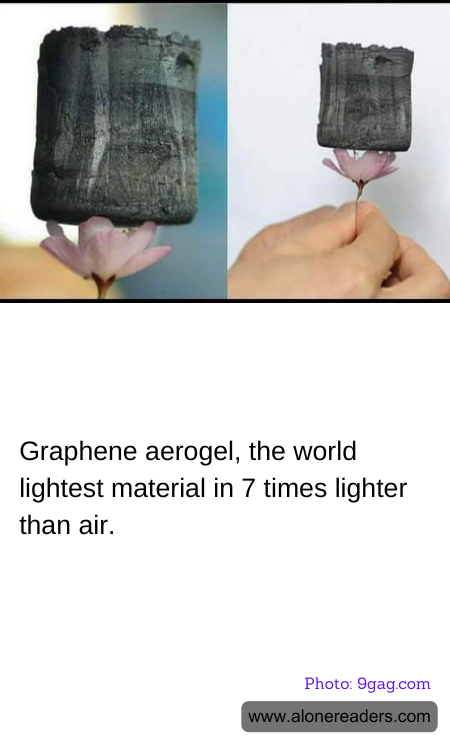
Graphene aerogel, often hailed as the world's lightest material, showcases remarkable qualities that set it apart in the realm of advanced materials. In an astonishing revelation, it has been noted that graphene aerogel is seven times lighter than air, making it an incredible innovation in both material science and practical applications.
Graphene aerogel is primarily composed of graphene, which is a single layer of carbon atoms arranged in a two-dimensional honeycomb lattice. This arrangement grants graphene exceptional strength and conductivity, which are further enhanced when manipulated into an aerogel form. Aerogels are porous materials that boast extremely low densities and are created by replacing the liquid component of a gel with gas in a process known as supercritical drying.
The lightness of graphene aerogel is due to its 99.8% air content, which not only makes it ultra-lightweight but also provides it with excellent thermal insulation properties. This characteristic makes it a promising material in fields such as energy storage, thermal insulation, and environmental cleanup. Its porous structure enables it to absorb up to 900 times its own weight in oil, offering huge potential for combating oil spills by efficiently skimming oil from water.
Moreover, the conductivity and strength of graphene aerogel expands its uses into electronics and construction. Lightweight yet durable composites can be fashioned, suitable for constructing lighter aircrafts, vehicles, and even wearable technology. The transfer of heat and electricity through the material can also lead to advancements in sensors, batteries, and other electronic components.
In terms of scalability and commercial production, there are challenges primarily due to the high cost and complexity of synthesizing large quantities of pure graphene and maintaining the integrity of the aerogel structure during manufacturing. However, ongoing research and development are continuously advancing the methodologies to synthesize this material more efficiently and cheaply.
The discovery and ongoing improvements in graphene aerogel technology epitomize the fusion of scientific curiosity with practical application, shaping a future where the lightest material can significantly impact various sectors, from environmental solutions to the tech industry, with its broad range of applications promising to revolutionize our approach to material challenges in numerous fields.