More About This Card
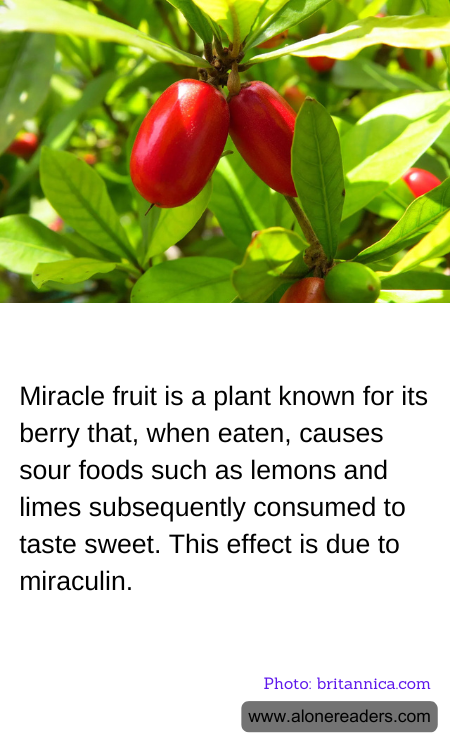
Miracle fruit, scientifically known as Synsepalum dulcificum, is a remarkable plant native to West Africa. It is best known for its small red berries that have the unusual ability to modify taste perceptions. When the pulp from the berry of the miracle fruit is consumed, it binds to the taste buds on the tongue and temporarily alters how they interpret flavors. This effect is primarily due to a glycoprotein called miraculin that the fruit naturally contains.
Miraculin works by binding to the sweet receptor cells on the tongue. Interestingly, it doesn’t activate these receptors on its own. Instead, it changes the way they respond to acids. Normally, when acidic foods enter the mouth, they taste sour. However, after consuming miracle fruit, these same foods will instead taste incredibly sweet. This effect can last from 30 minutes to about 2 hours, depending entirely on the individual.
The implications of miracle fruit for culinary use are vast. It has led to the creation of "flavor tripping" parties where people gather to experience common foods in a new way. Lemons, limes, and even vinegar can be consumed and enjoyed like never before, tasting as sweet as candy. This property of miracle fruit has not only made it a subject of curiosity but also a potential tool for healthier eating. For example, it could be used to make less appealing but healthy foods more palatable without adding sugar or artificial sweeteners.
Furthermore, there is growing interest in the potential medical applications of miracle fruit. For cancer patients, one of the side effects of chemotherapy is a metallic taste in the mouth, which can be offset by miraculin. Additionally, individuals with diabetes or those aiming to reduce sugar intake might find miracle fruit a helpful aid in managing their cravings for sweets.
Despite its promising benefits, the cultivation and distribution of miracle fruit are not without challenges. The plant itself is quite finicky, requiring specific conditions to grow — typically humid, tropical environments. Moreover, the fruits are highly perishable, making them difficult to transport or store.
In conclusion, the miracle fruit is a fascinating example of how nature can surprise and benefit us in unexpected ways. Through ongoing research and creative culinary experimentation, the possibilities for its application continue to expand, offering exciting prospects for future developments in both the food industry and medical science.