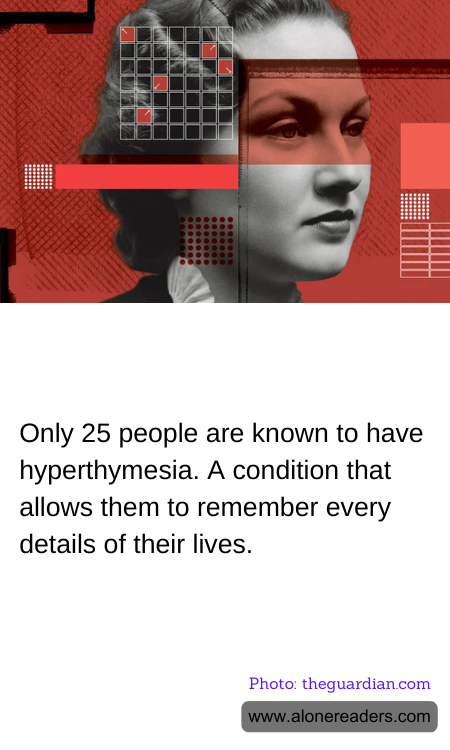
Hyperthymesia, also known as highly superior autobiographical memory (HSAM), is an extraordinary neurological condition that enables individuals to remember an immense amount of personal experiences in great detail. Only about 25 cases have been officially confirmed worldwide, making it an exceptionally rare phenomenon. People with hyperthymesia can recall almost every day of their lives with precise detail, including the minutiae of everyday events, conversations, and even the weather.
This remarkable memory recall extends back into early childhood, a period from which few individuals can remember more than fragmented moments. For instance, someone with hyperthymesia might be able to describe in detail what they did on a random day decades prior, such as what they ate for breakfast or the clothes they wore. This ability is often involuntary and automatic; these memories don't require conscious effort to retrieve, unlike the typical ways others might actively try to remember past events.
Scientists are still unraveling how and why hyperthymesia occurs. Initial studies suggest that individuals with this condition have differences in brain structures involved in memory and recollection. For example, research has indicated that the temporal lobe and caudate nucleus in their brains might be larger than in those without the condition. These areas are associated with the storage and retrieval of memories, which might help explain the superior memory capabilities seen in hyperthymesia.
The implications of living with hyperthymesia are profound. On one hand, this extraordinary memory can be beneficial, such as in academic settings or careers where detail-oriented tasks are paramount. On the other hand, it can come with emotional burdens. The inability to forget life's more traumatic or embarrassing moments can be distressing. People with hyperthymesia might also struggle with social interactions due to their unusual, detailed recollections of every encounter.
Despite its challenges, hyperthymesia provides invaluable insights into the workings of human memory. It raises significant questions about the nature of remembering and forgetting, and how our memories shape who we are. By studying individuals with hyperthymesia, researchers hope to learn more about the broader spectrum of memory capabilities in humans, potentially leading to better understanding of memory disorders and how memory functions in the general population. As research continues, the mysteries of hyperthymesia may unfold further, offering a deeper understanding of one of the most complex human abilities: memory.
