More About This Card
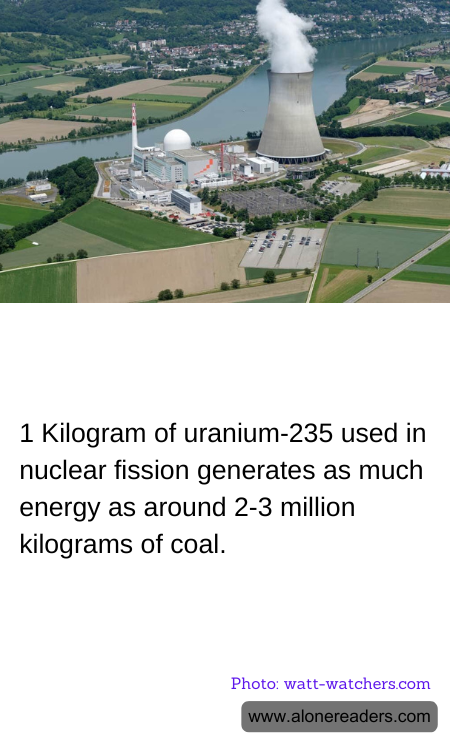
The immense energy potential of uranium-235 is a cornerstone of nuclear power technology, demonstrating a remarkable disparity in the energy outputs between nuclear fuels and traditional fossil fuels. When we examine the energy production capabilities of uranium-235, a single kilogram can generate as much energy as about 2 to 3 million kilograms of coal. This striking difference is primarily due to the processes that release energy from these materials.
Uranium-235 undergoes nuclear fission, a powerful process where the nucleus of an atom splits into two or more smaller nuclei, releasing energy, neutrons, and gamma photons. This process is exponentially more efficient than the chemical reactions occurring during the burning of coal, where energy is produced through combustion. Combustion involves the burning of coal in the presence of oxygen, leading to the release of carbon dioxide, water vapor, and energy. Though effective for industrial use, it lacks the efficiency seen in nuclear fission due to the amount of fuel needed to produce an equivalent level of energy.
The stark efficiency difference between uranium-235 and coal highlights not only the potential for significant energy production but also the challenges and benefits associated with each source. For instance, while nuclear power plants require significantly less fuel and produce no direct carbon emissions during operation, they deal with challenges such as radioactive waste disposal, higher initial construction costs, and concerns about nuclear accidents. Conversely, coal, despite its abundance and established supply chains, produces large amounts of carbon dioxide and other pollutants, contributing to environmental issues like acid rain, smog, and global climate change.
Moreover, the high energy density of nuclear fuel like uranium-235 makes it particularly appealing for long-term energy supply, especially in countries lacking easy access to fossil resources. However, the overall evaluation of nuclear power versus coal also involves considerations of geopolitical and environmental implications, advancements in renewable energy technologies, and societal acceptance. As the global community continues to seek sustainable and less environmentally damaging energy solutions, the role of nuclear power remains a topic of significant debate and development, highlighting the need for innovation in energy technologies across the board.