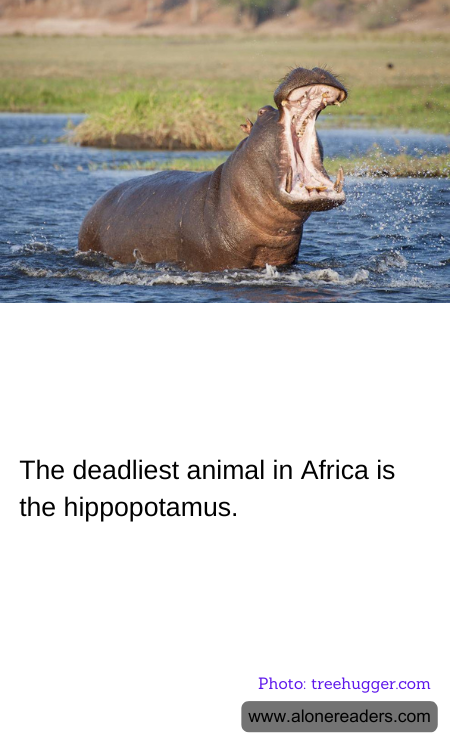
The hippopotamus, often perceived as a gentle giant, actually holds the title of the deadliest animal in Africa. This formidable creature is responsible for more human fatalities on the continent than any other large animal. Hippos are inherently aggressive and highly territorial, particularly when they are in water. Despite their bulky frame, which can weigh up to 2,500 kilograms, hippos are surprisingly agile and can run at speeds of up to 30 kilometers per hour. This agility, combined with their territorial nature, makes them very dangerous, especially to those unacquainted with their habits.
The danger of hippos is compounded by their habitat preferences. They commonly live in rivers, lakes, and marshlands where they spend large amounts of time submerged to keep cool under the hot African sun. This often leads to dangerous encounters with humans, especially in regions where people use these water bodies for washing, fishing, or crossing. Hippos can capsize boats and canoes without warning and with deadly force.
Moreover, the hippopotamus has large canines and powerful jaws, which it can use with deadly precision. A typical defensive or territorial attack from a hippo can be catastrophic, resulting in severe injuries or death. Most attacks occur because hippos feel threatened or because their space has been invaded. Misreading or underestimating a hippo's comfort zone can lead to tragic encounters.
Efforts to mitigate human-hippo conflicts have included educating local populations about hippo behavior, promoting the avoidance of known hippo territories, especially at night when hippos leave the water to graze. In some African cultures, hippos are respected and regarded with a mixture of awe and fear, acknowledging the animal's power and the threat it poses.
While it's easy to marvel at the size and seeming docility of hippos while watching them lazily wallow in the water, it's crucial to remember that they are among the most dangerous animals in Africa. Their deadly status underscores the complex relationship between wildlife and human inhabitants in regions where vast, wild environments are a backdrop to daily life. This relationship requires balance, respect, and an understanding of the nature of some of Earth's most formidable creatures.
