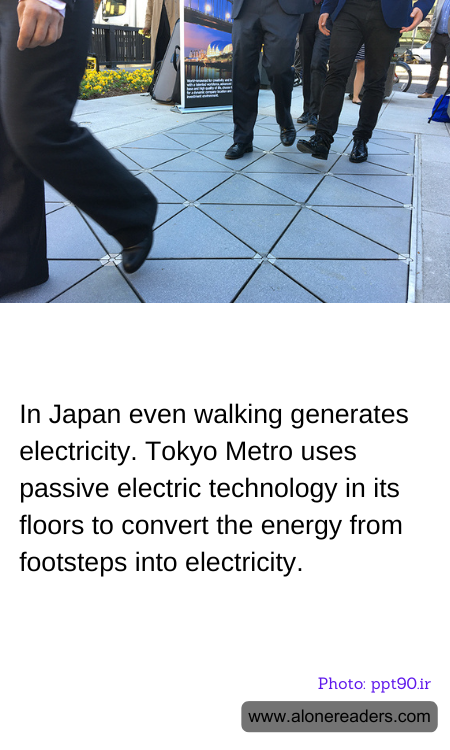
In a world increasingly conscious of sustainability and efficiency, innovative solutions to energy generation are highly sought after. Japan, being a leader in both technology and ecology, has found a unique way to harness an everyday activity—walking—as a source of electricity. Particularly notable is the adoption of such technology in the bustling city of Tokyo, where Tokyo Metro has integrated passive electric technology into its floors to convert the energy from footsteps into usable electricity.
This technology, known as piezoelectric flooring, works on the principle that certain materials can generate an electric charge when subjected to mechanical stress. In the context of a metro system, where thousands of people traverse the platforms every day, the potential for energy production is substantial. As commuters walk or stand on these specially equipped floors, their weight and motion exert pressure, which is then converted into electrical energy.
The implications of this technology are significant. Firstly, the electricity generated can be used to power the station’s lighting, electronic displays, and other systems, thus reducing the overall energy consumption and operational costs of running a busy metro station. Additionally, it sets a precedent for renewable energy generation in high-traffic public areas, demonstrating that urban spaces can be designed to be both functional and sustainable.
Moreover, public acceptance and enthusiasm for such green initiatives can boost broader efforts toward environmental sustainability. When commuters realize that their simple act of walking can contribute to energy production, it fosters a greater awareness of and commitment to sustainable practices. This can lead to increased public demand for more eco-friendly infrastructure and technologies in other areas of urban life.
The integration of piezoelectric technology in Tokyo Metro is just one example of how cities can innovate to meet sustainability goals. It not only showcases Japan's commitment to pioneering green solutions but also serves as an inspiration for cities worldwide to explore how they can transform everyday activities into renewable energy sources, pushing forward the boundaries of what’s possible in urban sustainability.
