More About This Card
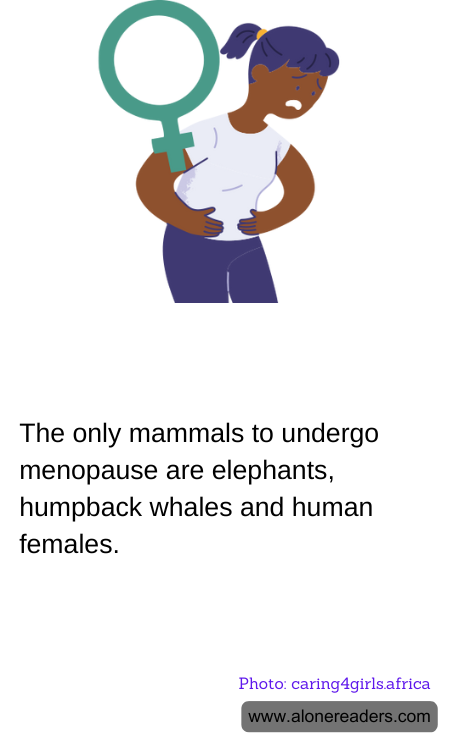
Menopause is a fascinating and unique biological process that marks the end of a female's reproductive years. While it is a well-known life stage in human females, it is quite rare among non-human species. In fact, only a few mammals outside of humans are known to experience menopause: elephants, humpback whales, and orcas.
In humans, menopause typically occurs between the ages of 45 and 55, signaling the end of the ovaries' ability to produce eggs and, consequently, reproductive hormones like estrogen and progesterone. This transition brings various physiological changes and can affect metabolic, cardiovascular, and bone health, among other systems.
Elephants share some intriguing similarities with humans regarding menopause. Female elephants can live well beyond their reproductive years, which usually end between the ages of 40 and 60. Like humans, older female elephants play a crucial role in the social structures of their herds. They often assume leadership roles, using their experience and knowledge to guide and protect their families, especially in finding food and water sources during dry periods. This suggests that the evolutionary benefits of menopause may include not only stopping the production of offspring in aging females but also enhancing the survival of the younger generations through the wisdom of the elder matriarchs.
Marine mammals such as humpback whales and orcas also exhibit menopausal traits. These creatures are highly social animals, living in complex societies where knowledge and experience are critical for survival. In orcas, post-reproductive females take on a leadership role within their pods. Studies indicate that these older females lead the group in times of scarcity, particularly to salmon feeding grounds, which suggests that their extended lifespan beyond reproductive years plays a crucial role in the survival of their kin.
The phenomenon of menopause in these species indicates an evolutionary strategy that transcends mere reproduction. By continuing to live beyond their reproductive years, these animals contribute to the survival of their offspring and relatives, thereby enhancing the preservation of their genes. This strategy of kin selection, where individuals assist the reproductive success of their genetic relatives, might explain why menopause has evolved in these specific species. Also, the fact that menopause is so rare among mammals highlights its significance as an evolutionary adaptation to specific ecological and social environments in which the benefits of generational knowledge significantly boost the survival of the species.
Understanding menopause in different species provides valuable insights into the wide array of life histories in the animal kingdom and deepens our understanding of aging and social structures in nature.