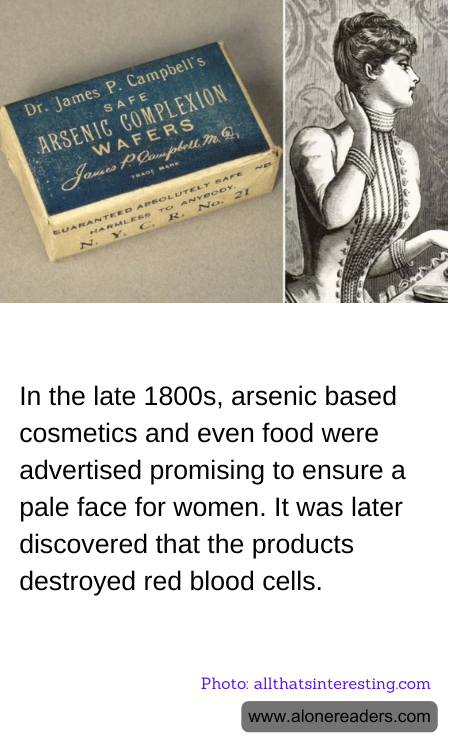
More About This Card
In the late 19th century, the pursuit of beauty led many women to use products that were not only harmful but deadly. Arsenic-based cosmetics became popular because they promised the much-coveted pale, ethereal appearance that was synonymous with beauty and nobility at the time. These products, outrageously, were marketed as enhancing natural beauty by lightening the skin tone, despite their toxic contents.
The use of arsenic was not limited to external applications; it was also ingested. Products like Dr. Simms' Arsenic Complexion Wafers were advertised as a convenient means to achieve a “beautifully transparent” complexion. The prevailing belief that a pale, unblemished skin represented the ideal of beauty overshadowed the dangerous realities of such practices.
Unfortunately, the consequences of using these products were dire. Arsenic, a potent poison, led to numerous health issues. It brought about severe skin problems, digestive issues, and ultimately, the destruction of red blood cells, causing organ damage and often, death. The toxic effects of arsenic accumulate in the body, meaning regular users of these cosmetics suffered compounded adverse effects over time.
It wasn’t until the advent of better scientific understanding and public health reforms in the early 20th century that the dangers of arsenic-laden products were fully recognized. The slow, though eventual, improvement in regulatory oversight led to the banning of such hazardous ingredients in consumer products. This shift not only marked a significant advancement in public health but also heralded a new era of beauty standards, slowly moving away from harmful practices and towards safer, scientifically validated skincare and beauty products.
The arsenic episode remains a stark reminder of how cultural standards of beauty can potentially lead to hazardous health practices and underscores the importance of regulatory oversight in consumer products.