More About This Card
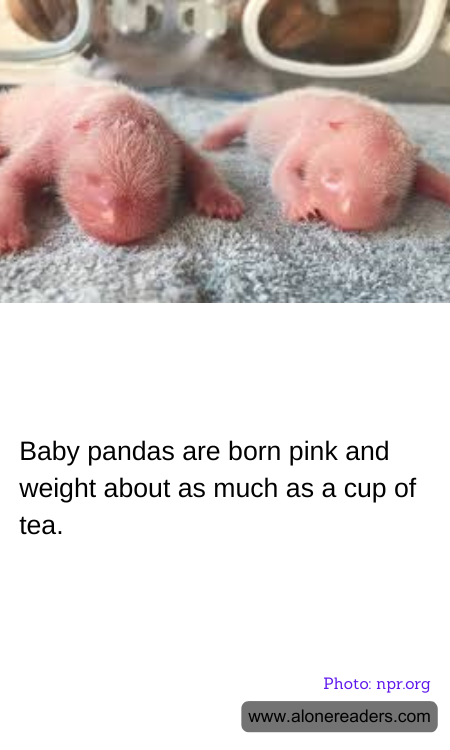
One of the most captivating facts about giant pandas is their surprising appearance at birth. Unlike their distinctive black and white appearance in adulthood, baby pandas are born pink, hairless, and remarkably tiny. They weigh around 100 grams, which is approximately the weight of a cup of tea. This stark contrast in their initial and mature stages is a fascinating aspect of their development.
At birth, panda cubs are exceptionally vulnerable and dependent. They are blind and do not open their eyes until they are six to eight weeks old. The mother panda plays a crucial role in the survival of the newborn cub, often cradling and protecting it continuously. She is also very attentive, hardly leaving the cub alone, except to eat or drink. This intense care is vital, considering the cub's initial helplessness and development needs.
The growth of a panda cub is equally fascinating. Within the first month, the skin of the cub begins to change from pink to the iconic black and white pattern. Their fur starts to grow during this period, providing them with the necessary insulation to keep warm on their own. Over several months, as they develop their distinct coloring and fur, they grow rapidly and start to resemble their parents more closely.
Interestingly, the pink phase and subsequent development of a panda cub's coloration and fur have evolved as adaptations to their environments and lifestyles. The distinct black and white coloring of the giant panda is thought to serve as camouflage and communication in their natural habitat, aiding them in blending into their snowy and rocky surroundings. Their initial lack of fur and small size might be nature’s way of ensuring that the mother can manage the energy requirements of birthing and initially caring for her offspring, a critical factor given the low-energy diet of bamboo on which these animals primarily rely.
As the panda cubs grow and become more independent, they start to explore and learn essential skills for survival in the wild. Despite this growth and learning curve, pandas remain a conservation-reliant species, with every birth in the wild and captivity celebrated as a victory for biodiversity and ecological preservation. The fascinating early stages of a panda cub's life highlight not only the wonders of nature but also the importance of conservation efforts to ensure these unique creatures continue to thrive for generations to come.