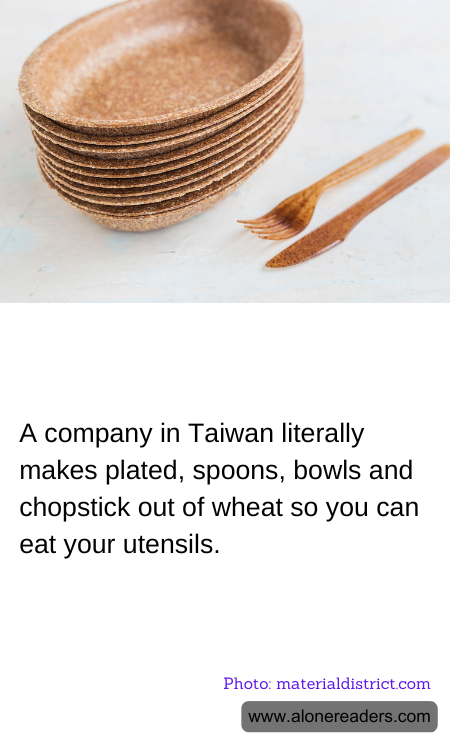
In a world increasingly focused on sustainability and reducing waste, innovative solutions like edible eating utensils are bringing new excitement to eco-friendly practices. One innovative company in Taiwan has taken a unique approach by turning wheat into utensils such as plates, spoons, bowls, and chopsticks. This fascinating initiative not only aims to curb the pervasive use of disposable plastic utensils but also adds an intriguing element to the dining experience.
These edible utensils are made using wheat bran, a byproduct of wheat grain milling. The production process involves combining wheat bran with other natural ingredients to create a dough-like mixture, which is then molded into the shapes of various utensils and baked until hard. The final product is sturdy enough to be used for eating, just like any traditional utensil, and can handle both hot and cold foods effectively.
What sets these wheat-made utensils apart is their ability to be eaten once the meal is concluded, offering a zero-waste option for diners. The flavor of these utensils is described as mildly wheaty, subtle enough to not overpower the dishes but discernible when eaten alone. For those who prefer not to eat their cutlery, the products are biodegradable and compostable, decomposing much faster than plastic and without leaving harmful residues in the environment.
The concept of edible utensils isn’t just an ecological movement; it's also a practical solution in settings like food festivals, outdoor events, and in-flight meals, where reducing waste can be challenging. Moreover, in countries with a high usage of disposable utensils, switching to edible versions can significantly cut down on plastic waste that often ends up in landfills or oceans.
The initiative by the Taiwanese company speaks volumes about the possibilities of combining technology, traditional food processes, and innovative thinking to tackle environmental issues. It is a testament to how businesses can contribute to sustainability goals and influence consumer habits towards more environmentally friendly practices. This pioneering effort not only provides a practical response to waste reduction but also reshapes how society thinks about the products we use in our everyday lives. As the world leans more towards sustainability, such innovations become crucial in paving the way for more zero-waste futures.
