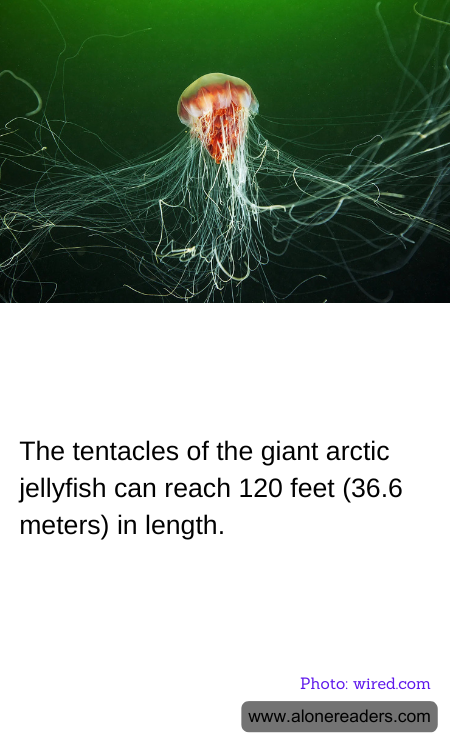
The giant Arctic jellyfish, known scientifically as Cyanea capillata or more commonly as the lion's mane jellyfish, is a fascinating and formidable creature of the seas. It holds the title for the largest known species of jellyfish in the world. The jellyfish's most mesmerizing feature, its tentacles, can extend up to an astonishing 120 feet (about 36.6 meters). This length is not only a defense mechanism but also a deadly tool for hunting, as these tentacles are equipped with thousands of stinging cells called nematocysts. These cells release a venom that paralyzes prey such as fish and small crustaceans, which are then brought towards the jellyfish's mouth for consumption.
Residing primarily in the cold waters of the Arctic, North Atlantic, and North Pacific Oceans, the creature prefers the chill of the deep sea though it is sometimes found near the surface. Seasonal changes often influence its sightings near coastal areas, particularly during the spring and fall when it comes closer to the surface, likely in pursuit of food or due to breeding patterns. The presence of this giant species, with its sprawling tentacles and impressive bell size, which can measure up to 7 feet (2.1 meters) in diameter, creates an imposing sight.
Despite its terrifying appearance and potent sting, the giant Arctic jellyfish plays a significant role in its marine ecosystem. It serves as a crucial predator, helping to maintain the balance by controlling smaller jellyfish populations and consuming large quantities of plankton. Moreover, it also acts as a habitat and protective haven for smaller fish species, which often hide among its tentacles seeking refuge from predators. This symbiotic relationship highlights the ecological importance of the lion's mane jellyfish beyond its initial awe-inspiring visual impact.
Humans should be cautious around this jellyfish, as its sting can cause severe pain and, in some cases, serious medical reactions in individuals sensitive to its venom. However, the enigmatic beauty and complexity of the giant Arctic jellyfish continue to intrigue scientists and ocean lovers alike. Its sheer size and the breathtaking eeriness of its extended, flowing tentacles make it one of the marvels of the marine world, demonstrating the incredible diversity and adaptability of life forms in Earth's oceans.
