More About This Card
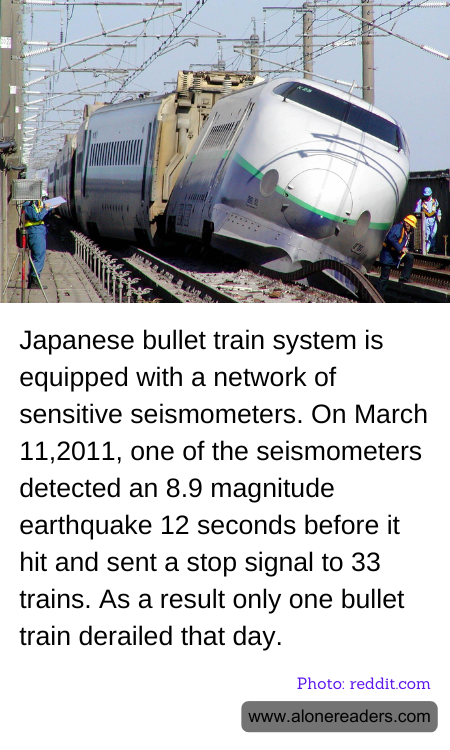
Japan's bullet train system, renowned for its precision and cutting-edge technology, is notably integrated with an extensive network of sensitive seismometers designed specifically to enhance passenger safety during seismic events. This network played a critical role on March 11, 2011, during one of the most devastating earthquakes in recent history. Moments before the 8.9 magnitude quake struck, one of the system's seismometers detected the initial tremors. Within seconds, it triggered an automatic stop signal to 33 trains running at that time.
This rapid response system is a testament to Japan's commitment to safety and technological innovation. The system is designed to detect seismic activity and react almost instantaneously, safeguarding not only the passengers aboard the trains but also the integrity of the infrastructure itself. On that tragic day, while much of Japan faced severe destruction, the foresight in implementing such a system into the Shinkansen (bullet train) networks proved invaluable. Despite the massive scale of the earthquake and the ensuing chaos, only one bullet train derailed—a minor incident when compared to the potential for catastrophic accidents without such preemptive measures.
The derailment did not result in any fatalities or serious injuries among the passengers, which further underscores the effectiveness of the earthquake response system installed in these trains. This technology not only detects the seismic waves but also evaluates their strength and potential impact, providing crucial seconds for automated systems to bring high-speed trains to a halt before the most severe shaking begins.
The success of this system during the 2011 earthquake has set a world standard in railway safety during natural disasters. It demonstrates how technology, when effectively applied, can significantly mitigate the risks associated with such unpredictable natural events. The Japanese bullet train network continues to be one of the safest in the world, largely due to its proactive approach to safety and continuous innovation in its operations and infrastructure. This event has also inspired other earthquake-prone countries to consider similar technologies for their own train systems, potentially saving thousands of lives in the face of future earthquakes.