More About This Card
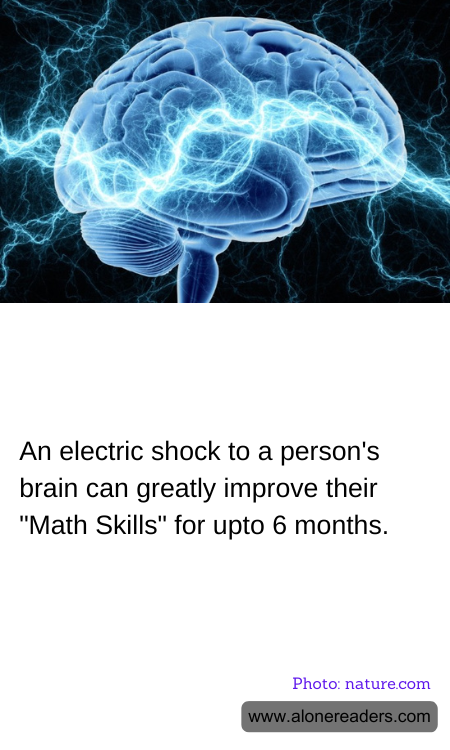
Electric brain stimulation, specifically a method known as transcranial direct current stimulation (tDCS), has shown promising results in enhancing certain cognitive abilities, including mathematical skills. This non-invasive technique applies a low amplitude direct current to specific parts of the brain through electrodes placed on the scalp. The objective is to modulate neuronal activity, which could potentially make it easier for neurons to fire and lead to improved cognitive performance.
Research indicates that tDCS can particularly affect the area of the brain associated with numerical understanding - the parietal lobe. By enhancing the excitability of neurons in this area, individuals may experience improved ability in processing numerical data and solving mathematical problems. Studies involving tDCS have demonstrated that subjects perform better on arithmetic tasks, and these improvements can persist for up to six months post-treatment. This sustained effect suggests that tDCS might help in strengthening neural connections over time, leading to long-lasting cognitive enhancements.
However, it is essential to note that the effectiveness and safety of tDCS vary. Factors such as the duration of stimulation, the specific brain regions targeted, and individual differences in brain anatomy and function significantly influence the results. Moreover, while there are potential benefits, the ethical implications and possible long-term effects of brain stimulation are areas of ongoing debate and research. Potential risks, such as skin irritation under electrodes, headache, fatigue, and, more rarely, transient mood changes need to be carefully managed.
In addition to its application in enhancing mathematical ability, tDCS is being studied for its potential to assist in various mental health treatments, such as depression and schizophrenia, and in rehabilitation for stroke patients. As the technology and our understanding of the human brain continue to evolve, the scope of tDCS could expand, offering more targeted and effective interventions for a wide range of cognitive functions and disorders.
Despite its promising aspects, tDCS should not be considered a standalone solution or an educational quick fix. It is part of a broader category of neuroenhancement technologies that require further rigorous testing and ethical considerations before widespread use. Integrating tDCS with traditional educational methods and cognitive training could potentially yield more significant benefits than either approach alone. As research progresses, it will be crucial to continue assessing the balance between benefits and risks, ensuring that such advancements are used responsibly and ethically.