More About This Card
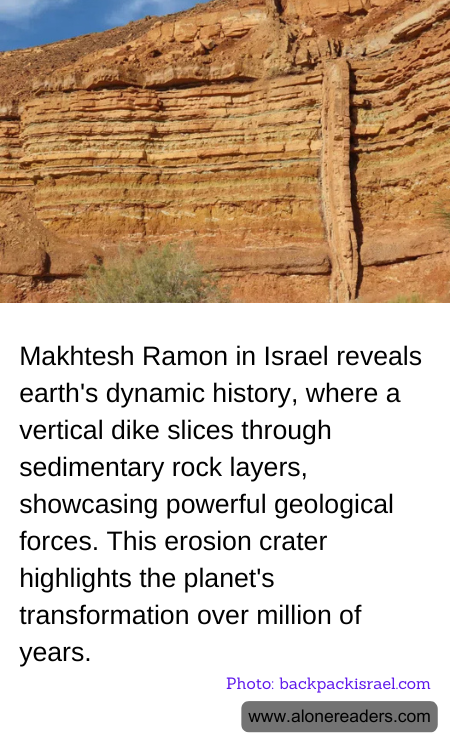
Makhtesh Ramon, located in Israel's Negev Desert, is a spectacular geological feature that offers profound insights into the dynamic processes that have shaped the Earth over millions of years. Unlike typical craters formed by meteorite impacts, Makhtesh Ramon is an erosion crater, also referred to as a makhtesh; a landform unique to the region, made through the gradual erosive power of water and climate.
The most captivating aspect of Makhtesh Ramon is the striking vertical dike visible at its heart. This geological structure, composed of harder magmatic rock, has sliced through the softer sedimentary rock layers around it. It stands as a testament to the intense volcanic activity that once occurred in the area. The dike was formed when magma forced its way up through cracks in the Earth's surface, cooling and solidifying before it could erupt as lava. Over time, the surrounding softer rock eroded away, leaving the hard, erosion-resistant magmatic dike exposed.
This natural monument is not only a visual spectacle but also a crucial educational resource that details the Earth’s geological timeline. The sedimentary layers that flank the dike provide a sequential record of the environmental and climatic conditions that prevailed at different times. By studying these layers, scientists can trace back the various stages of the Earth’s historical climate and how they have influenced the evolution of life.
Furthermore, the process of erosion that created this crater reveals the relentless, yet often subtle, power of natural forces. Water, wind, and temperature fluctuations have, over millions of years, carved out this deep, expansive cavity in the desert landscape. This slow and persistent transformation is a poignant reminder of nature's ability to sculpt and reshape the planet.
Makhtesh Ramon stands not only as a natural wonder but also as a symbol of Earth’s ever-changing nature, underscoring the continuous interplay of construction and erosion, deposition, and excavation. For geologists, ecologists, and tourists alike, it offers a unique window into the past processes of our planet, illustrating the forces that can alter our natural world over unimaginable timescales. Its educational and scientific importance, combined with its natural beauty, make Makhtesh Ramon a key destination for anyone interested in the profound dynamism of Earth's geological history.