More About This Card
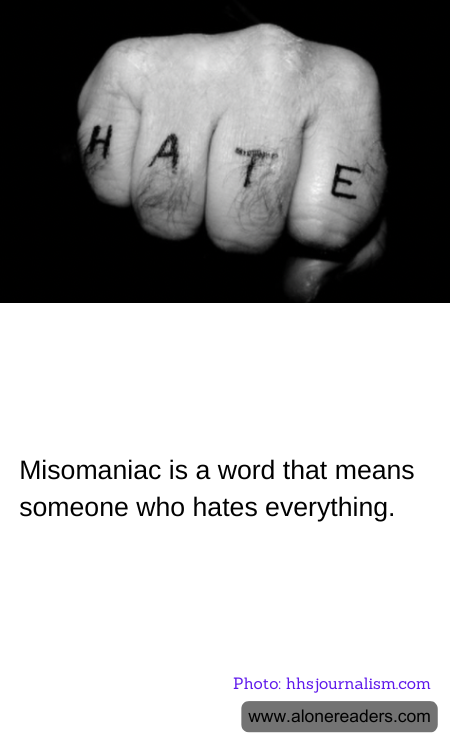
Misomaniac is a term that isn't widely recognized in standard dictionaries; however, it can be broken down to understand its intended meaning. Stemming from the Greek roots "miso-" meaning hatred, and "-maniac," which implies obsession or frenzy, a misomaniac would be someone who has an obsessive hatred or dislike towards everything. This concept, although extreme, speaks to a state of mind that can be seen in broader psychological and sociocultural contexts.
People described as misomaniacs might express pervasive negativity or a generally hostile attitude towards people, institutions, experiences, and objects. It's important to differentiate this from depression or general dissatisfaction, as misomania suggests a more intense and all-encompassing disdain. Such a viewpoint could stem from numerous psychological conditions or environmental factors. For instance, a person who has endured numerous significant adverse experiences might develop a hardened, cynical view of the world, which could be perceived as misomania.
In the sphere of mental health, this concept might overlap with symptoms observed in disorders such as depression, where individuals often exhibit pervasive sadness and a loss of interest or pleasure in life. It might also be seen in certain personality disorders, characterized by chronic feelings of emptiness or irritability towards the world and the self. However, misomania is not a clinically recognized diagnosis and should be considered more as a descriptive term rather than a medical or psychological condition.
If identified, nurturing compassion, empathy, and understanding towards a person showing signs of misomania is crucial. Therapy and counseling might help, provided the issue is approached delicately and from a standpoint aiming to understand the underlying causes of such strong feelings of animosity. Developing strategies to cope with these feelings, possibly by gradually introducing positive interactions and reflections, could also be beneficial in alleviating the overwhelming negativity.
Understanding and acknowledging such extreme states of mind, even if not formally recognized in psychological domains, is vital. It reflects the complexities of human emotions and the impact of life experiences on our psyche. As we advance in our understanding of mental health, perhaps terms like misomaniac will prompt further investigation and discussion regarding the spectrum of emotional and psychological human conditions.