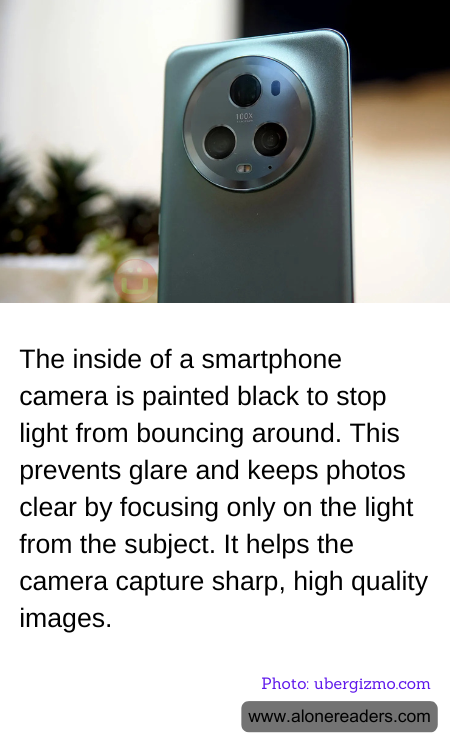
In the intricate world of smartphone technology, one might not initially consider the color inside a camera to be a significant factor. However, the decision to paint the inside of a smartphone camera black is a critical design choice that enhances the quality of photographs. This is primarily because black absorbs light, thereby preventing unwanted reflections within the camera's architecture.
When a photo is taken, light from the environment enters through the camera lens, targeting the sensor which captures the image. If the interior surfaces were not black but instead reflective, this light could bounce around inside the camera module. These internal reflections could lead to glare, lens flare, and generally washed-out photos, as extraneous light would interfere with the light actually intended to form the image.
By painting the inside of the camera black, manufacturers ensure that stray light is absorbed rather than reflected. This absorption is crucial, especially in compact devices like smartphones where space is limited and every bit of stray light can significantly impact the quality of the resulting image. Moreover, this control over light leakage is vital for achieving high contrast in photos, which allows for clearer and more vibrant images. Overall, the black paint inside a camera is an excellent example of a small but significant design choice that goes a long way toward improving the functionality and output of the device.
