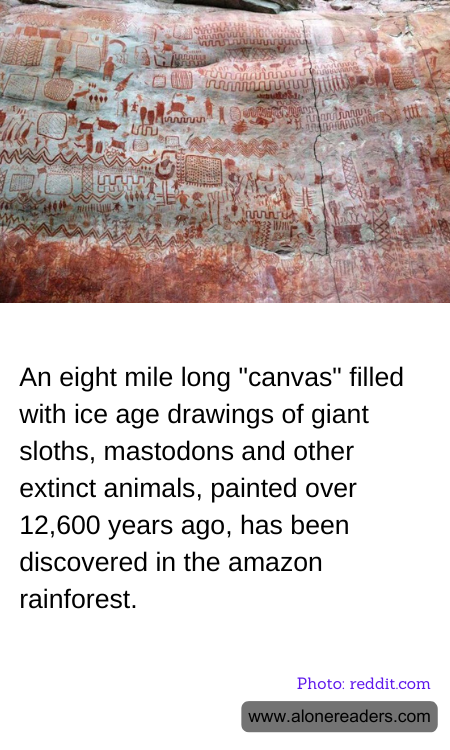
In a stunning revelation, archaeologists have uncovered a grand prehistoric canvas stretching over eight miles within the Amazon rainforest, etched approximately 12,600 years ago. This immense archaeological discovery depicts an array of ice age giants, including awe-inspiring drawings of giant sloths, mastodons, and other long-extinct animals. The findings ignite not only immense scientific interest but also a broader understanding of early human civilization and their environmental perceptions.
This unexpected discovery provides fresh insights into the lives of prehistoric people during the Ice Age. The detailed depictions of these creatures suggest a close observation and understanding, likely born from daily interactions; these ancient humans not only survived amidst these formidable animals but studiously recorded their existence and behavior. The array of animals etched onto this colossal natural canvas indicates a rich biodiversity that once thrived in the area before later extinctions, possibly due to climatic shifts or human activity.
The site was uncovered deep within the lush confines of the Amazon, highlighting the region’s historical significance — a testament to its undisturbed preservation of human history. The sketches are preserved almost perfectly, suggesting that the creators developed not only artistic skills but also techniques to ensure the longevity of their work. The style and substance of the artistry could also point to communal or ritualistic activities associated with the representation of these animals, potentially illustrating spiritual or cultural significance.
Given its scale and the era it represents, the discovery of this "canvas" is significant as it sheds light on a period of human history about which very little is known. Its study could broaden current understanding of migration patterns, social structures, and interaction with the environment amongst early human groups. Additionally, it promises to provide details about the region's past ecosystems, giving paleontologists a clearer picture of the flora and fauna of the time, thus offering a broader context of Earth's climatic and environmental history.
The preservation and study of this historical treasure are paramount. As researchers continue to decode the intricacies and mysteries captured on this ancient canvas, each drawing could contribute a piece to the larger puzzle of humanity's ancestral odyssey and environmental legacy. This discovery not only adds a vibrant chapter to the human story but also accentuates the importance of preserving our world’s heritage sites, acknowledging that they hold keys to understanding the vast tapestry of human existence.
