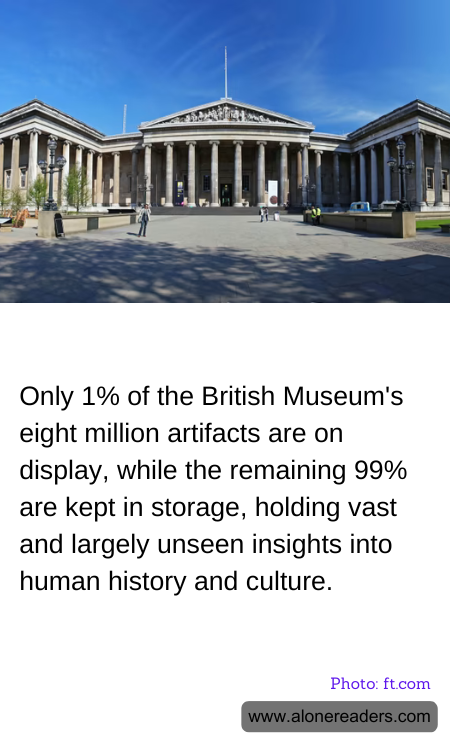
Tucked away in vast storage rooms, 99% of the British Museum's treasures remain largely unseen by the public eye. With only about 80,000 items on display at any one time, the museum is a mere glimpse into the complex tapestry of human history and culture that its complete collection represents. The museum's holdings encompass over eight million objects spanning two million years of history, yet much of this extensive collection is kept out of sight, raising both curiosity and controversy.
The hidden reserves of the British Museum include rare artifacts, ancient manuscripts, and historical relics that cover a range of civilizations, from the ancient Egyptians and Greeks to more contemporary cultures. These items are often preserved in climate-controlled environments to prevent deterioration, which limits their accessibility to the public. Such extensive collections in storage can serve various purposes including research, preservation, and future exhibitions. Scholars and researchers often gain access to these reserves, where they can study the nuances of human history in a way that isn't possible through display items alone.
The reasons for maintaining such a significant portion of the museum’s collection in storage involve logistical challenges, conservation concerns, and the curatorial decisions about which stories are most important to tell publicly. Space constraints are a clear factor; it is simply not feasible to exhibit all objects in a manner that allows meaningful engagement or ensures their preservation. Moreover, the rotation of exhibits helps maintain public interest and gives the museum the ability to highlight different themes or areas of its collection.
Despite these practical considerations, the vast stores of seldom-seen artifacts have sparked debates about the role of museums in society and the stewardship of cultural heritage. Questions are often raised about whether these treasures should be housed in their countries of origin, where they could be part of local historical narratives, rather than in the archives of global institutions like the British Museum.
This ongoing discussion has spurred initiatives to digitize collections and make them available online, offering a compromise solution by enhancing public access without risking the physical condition of the artifacts. Digital archives can provide a broader audience with insights into the breadth and depth of the museum’s collection, beyond what physical displays allow.
As we move forward, the challenge remains in balancing preservation, access, and representation, ensuring that as much of our shared human history as possible can be appreciated and understood, not only by those who walk through museum halls, but by people around the world.
