Earth hosts an astonishing array of life forms, some of which have life spans that nearly defy belief. Among these, certain organisms stand out for their incredible longevity, surviving for millennia and offering unique insights into biological endurance and the history of life itself.
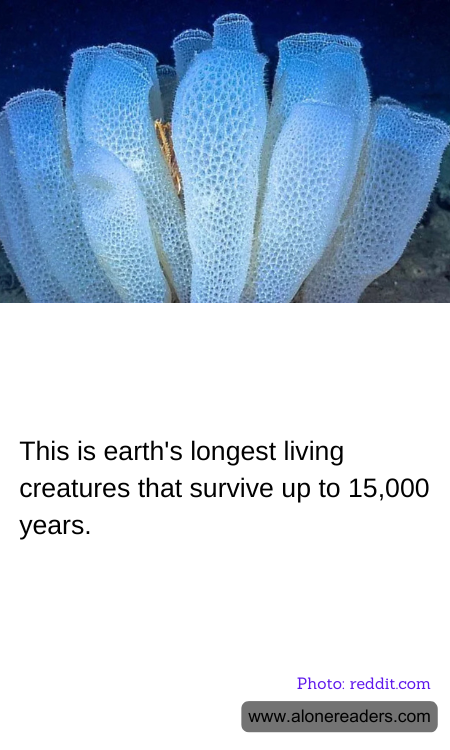
One of the most remarkable of these long-lived species is the Antarctic sponge, specifically species like Anoxycalyx joubini. These sponges can live for over 10,000 years, thriving in the cold, dark, and high-pressure environments of the Antarctic deep seas. Their slow growth rates and stable, extreme habitats contribute to their lengthy life spans. These sponges are crucial to their ecosystems, providing habitat and filtering water.
Even more astounding in terms of longevity is the endolithic bacteria found in the seafloor beneath the ocean’s crust. Studies suggest that these organisms, which live in microscopic cracks within rocks, can survive for as long as 15,000 years. They exist in an almost completely static state, with extremely slow metabolic rates that are adapted to their nutrient-scarce environment. This remarkable survival strategy not only challenges our understanding of life’s boundaries but also offers a model for studying life in extraterrestrial environments.
On land, some of the oldest living individual organisms are trees. Prominent among them is the Great Basin bristlecone pine (Pinus longaeva) located in the United States, which includes individuals that are over 5,000 years old. These trees have adapted to survive in harsh weather conditions and poor soils, traits that contribute to their incredible longevity.
The exploration of such long-lived creatures offers vital insights into the processes of aging, adaptation, and survival. Research into these organisms not only expands our knowledge of biodiversity but also has potential implications for medicine and the development of technologies aimed at prolonging human life and maintaining health in adverse conditions. Moreover, these organisms underscore the resilience of life and its ability to endure through time scales far beyond human lifespans, providing a broader perspective on our own place in the Earth’s history. Understanding the mechanisms behind such extreme longevity might one day impact how we approach our health and our treatment of the environment.
