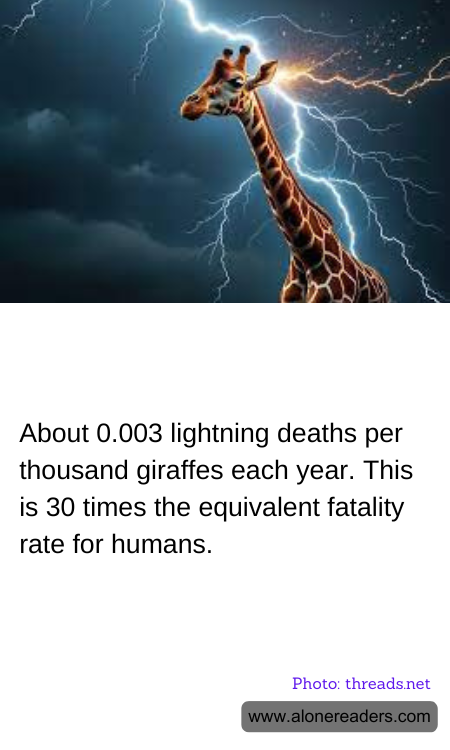
Lightning strikes may seem like a rare phenomenon, but for the world’s tallest land animal, the giraffe, they represent a significant threat. Recent studies have indicated that giraffes suffer from a surprisingly high rate of lightning-related deaths, estimated at about 0.003 per thousand annually. This rate is startling when compared to humans, for whom the lightning fatality rate is about 30 times lower.
The reason behind this heightened risk for giraffes may lie in their impressive height; adult giraffes typically stand between 4.6 and 6.1 meters (15-20 feet) tall. This towering stature makes them more susceptible to being struck in open savannah environments where they are often the tallest points. Trees often provide a slightly higher point, but in many African plains, trees are sparse or not much taller than the giraffes themselves, leaving these majestic animals exposed.
The structure and moisture content of a giraffe's body may also contribute to the risk. Being mostly water, their bodies are excellent conductors of electricity. Once struck, the electrical current can cause immediate and severe damage to vital organs, often resulting in fatalities. Moreover, the socio-behavioral patterns of giraffes, which involve small groups spread out over large areas, can make it difficult for them to find shelter during storms.
This data highlights a broader issue regarding the interaction between natural living beings and environmental forces. For conservationists, understanding these interactions is crucial to developing strategies to protect vulnerable species like the giraffe, whose populations have been declining due to habitat loss, poaching, and now, environmental factors such as lightning.
Efforts to mitigate these risks could include the creation of more structured shelters in giraffe habitats or even the strategic planting of taller, lightning-attractive trees to divert strikes away from giraffe populations. Additionally, given the slow reproductive rate of giraffes, any increase in adult mortality could be particularly detrimental, emphasizing the importance of targeted conservation strategies. Studies and policies that address these unique challenges are essential to ensuring that giraffes continue to stride across the savannah for generations to come.
