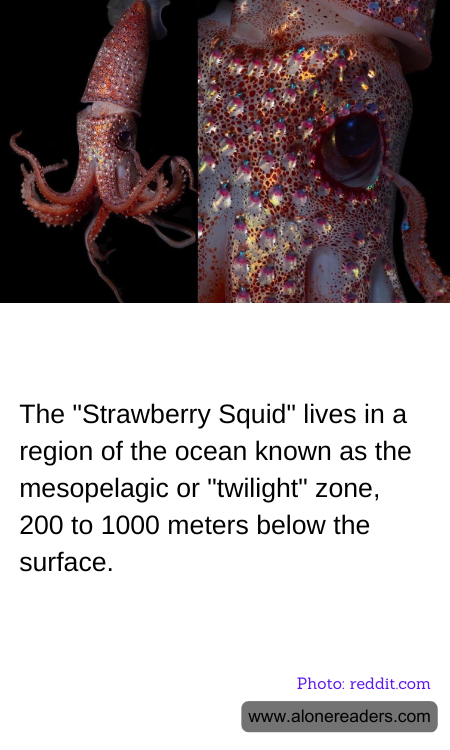
The Strawberry Squid, scientifically known as Histioteuthis heteropsis, inhabits the mesopelagic or "twilight" zone of the ocean. This zone, ranging from 200 to 1000 meters below the ocean's surface, is characterized by dim light penetrating the water, creating a world where complete darkness merges with the faint sunlight from above. The squid is particularly fascinating because of its unique adaptation to the low-light conditions in this environment.
One of the most notable features of the Strawberry Squid is its asymmetric eyes. It has one large, bulging yellow eye and one smaller, normal-sized blue eye. This unusual adaptation is thought to serve a critical purpose; the larger eye is tuned for spotting bioluminescence from prey or predators in the darker waters below, while the smaller eye is better suited for detecting faint silhouettes of creatures above, against the slight ambient light that filters down from the surface. This allows the squid to effectively navigate, hunt, and avoid predators in its dimly lit habitat.
The squid's body is small to medium in size, typically not exceeding 30 centimeters, and is covered with photophores which emit light. This bioluminescence is used in a variety of ways, from camouflage against the faint light from above to communication with potential mates or rivals. The squid can control the intensity of the light it emits, which is crucial in the overwhelmingly dark environment of the twilight zone.
Moreover, the body of the Strawberry Squid dazzles with its coloration resembling a strawberry's surface - dotted with numerous glowing spots. This appearance not only adds to its name but also plays a role in its survival tactics. It can blend into the sparse light patterns created by the scattering of sunlight as it descends through the water column, a phenomenon known as marine snow. This camouflaging capability makes it difficult for predators to spot the squid against the complex backdrop of light and darkness.
The environment of the mesopelagic zone presents numerous challenges to its inhabitants, including extreme pressure, scarcity of food, and the constant need for energy conservation. Creatures like the Strawberry Squid have evolved with specialized adaptations that not only facilitate survival but also allow for the exploitation of niche ecosystems barely hospitable to other marine life. Their survival and flourishing in such an environment underscore the incredible adaptability of life and provide valuable insights into evolutionary biology and the ecosystem dynamics of our oceans' deeper layers. Through studying creatures like the Strawberry Squid, scientists continue to uncover the complexities and interconnectedness of life forms in one of Earth's least understood habitats.
