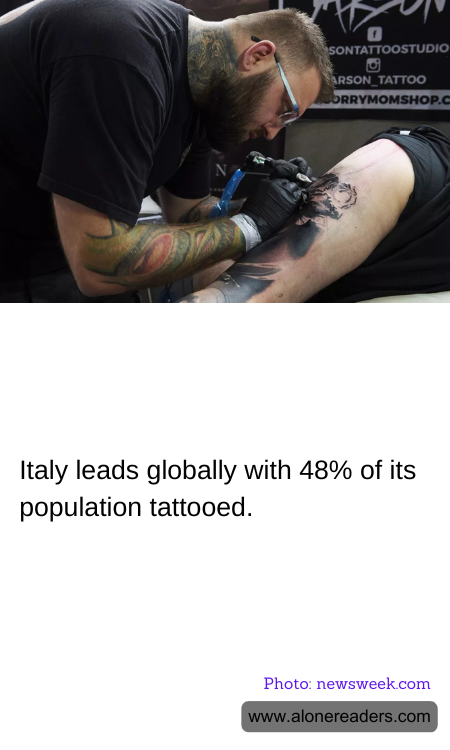
Italy has emerged as a global leader in an increasingly popular form of self-expression: tattooing. Around 48% of Italians now sport at least one tattoo, a statistic that highlights not only the shifting cultural norms in Italy but also reflects broader global trends in body art.
This high percentage points to a significant change in societal attitudes towards tattoos in Italy, where they were once considered taboo or associated primarily with certain subcultures. Today, tattoos are seen across a broad spectrum of the population, from the youth to the elderly, including professionals and celebrities, which has played a significant role in normalizing the art form. Gender norms around tattoos are also changing; for instance, it is no longer uncommon for women to have visible tattoos, signifying a shift from previous perceptions where tattooed women might have faced more stigma.
The rise in tattoos in Italy can also be credited to the influx of world-renowned Italian tattoo artists who have elevated tattooing to a form of high art, attracting clients from around the world. Shows and conventions dedicated to tattoo artistry are regularly held in major cities, helping to embed tattoo culture deeply into modern Italian society.
Moreover, the Italian public’s growing interest in tattoos may also reflect broader societal shifts towards individualism and self-expression. In a digital age where personal identity and visual representation have become ever more crucial, tattoos offer a personal and permanent form of self-expression. Young Italians, in particular, are using tattoos to make statements about their identities, beliefs, and affiliations.
However, the surge in popularity also brings challenges, such as regulatory issues and concerns about health risks associated with unlicensed tattoo parlors. There is an ongoing discussion in Italy about the need for stricter regulations to ensure that tattooing is performed safely and hygienically. This includes ensuring that artists are properly trained and that the establishments they work in meet stringent health standards.
In conclusion, Italy’s embracing of tattoo culture speaks volumes about changing aesthetics and attitudes in a country rich in art and history. While tattoos were once seen as a form of rebellion or nonconformity, they are now broadly recognized as a mainstream form of personal and artistic expression. As more Italians choose to decorate their skin with ink, the perceptions of tattoos continue to evolve, marking an intriguing shift in the cultural fabric of the nation.
