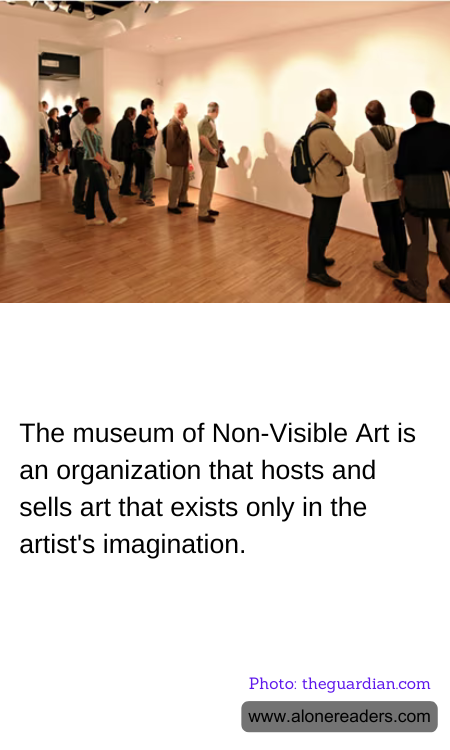
The Museum of Non-Visible Art (MONA) presents an intriguing and unconventional dimension to the concept of art by focusing on works that do not physically exist in our visible realm. This unique art institution encourages artists and audiences to explore art that is solely conceptual, existing only in the imagination of the artist and communicated to the audience through descriptions, engaging the mind of the viewer as the primary canvas.
The concept of non-visible art challenges traditional notions of art as a sensory experience predominantly reliant on sight. Instead, MONA shifts the emphasis to the cerebral nature of artistic expression. Artists participating in this movement create pieces that are composed of ideas and narratives without physical form. These imaginative creations can range from impossible sculptures to ephemeral experiences, existing only through the verbal or written descriptions provided by the artist.
Purchasing a piece from MONA is also an extraordinary event, as collectors receive a title to a work that only exists in thought. This transaction highlights the philosophical question of what constitutes ownership and the value of an idea. As patrons of non-visible art acquire "pieces," they are actually buying into the artist’s vision, fostering a deep, personal connection with the art on an intellectual level.
Although the notion of non-visible art may initially seem abstract or even perplexing, it roots itself in historical precedents in conceptual art where the idea or concept behind the work takes precedence over traditional aesthetic and material concerns. Artists like Yves Klein with his "Zone of Immaterial Pictorial Sensibility" series, or more contemporary examples like James Franco’s involvement with MONA, show that this genre, while niche, has significant bearings and challenges our perceptions of art and its consumption in today's visual and materially focused culture.
Engagement with MONA can be profoundly personal and introspective, offering an experience that revolves around imagination, personal interpretation, and the intangibles of human creativity. This museum doesn’t just ask its audience to “see” art; rather, it asks them to feel, think about, and internalize the art. The Museum of Non-Visible Art thus redefines the boundaries and commercial aspects of art in a way that highlights the limitless possibilities of human creativity and perception, making it a forefront of modern artistic exploration.
