More About This Card
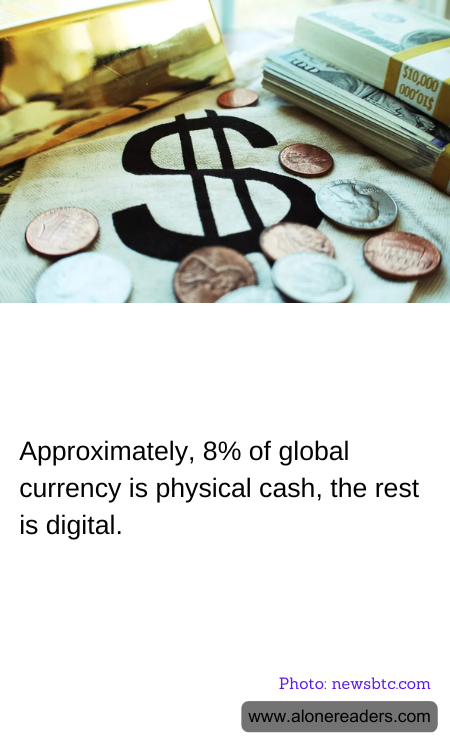
In today's global economy, the vast majority of money exists not in the form of physical cash, but as digital figures in computers and servers all around the world. An astonishing small percentage, approximately 8%, of the world's currency is actually manifested in tangible banknotes and coins. This tiny fraction underscores a significant shift towards digital transactions and electronic banking systems.
The rise of digital currency systems has been facilitated by advancements in technology and an increasing trust and reliance on digital platforms for financial transactions. Whether it's through transfers, debit cards, online payments, or even more recent innovations like cryptocurrencies and mobile wallets, the ease and convenience of digital transactions have vastly expanded access to financial services across the globe. This transition has not only influenced consumer behavior but has also reshaped the methodologies of business operations, government financial policies, and global economic frameworks.
Digital money offers several advantages over physical cash, including enhanced security features, reduced transaction times, and lower overhead costs for banking institutions. Digital transactions are also easier to track and manage, which helps in reducing the incidence of financial crimes such as money laundering. However, these benefits come with challenges, particularly regarding cybersecurity risks and digital fraud, requiring robust measures and continuous advancements in security technologies.
Moreover, the rapid embrace of digital currency raises significant considerations about financial equity and accessibility. There are concerns about a growing "digital divide" where individuals without access to digital banking services or reliable internet might find themselves disenfranchised from the mainstream economy. As such, ensuring that this digital shift does not exclude underserved and marginalized communities is a critical challenge for policymakers.
As we progress further into the 21st century, the role of physical cash is likely to become even more diminished, transforming how we think about and engage with money. Governments and financial institutions continue to explore and innovate in digital currency solutions such as central bank digital currencies (CBDCs), which promise to combine the credibility of traditional money with the efficiency of modern technology. This digital evolution, while transformative, reinforces the need for a balanced approach that promotes accessibility, inclusivity, and security in the global financial landscape.