More About This Card
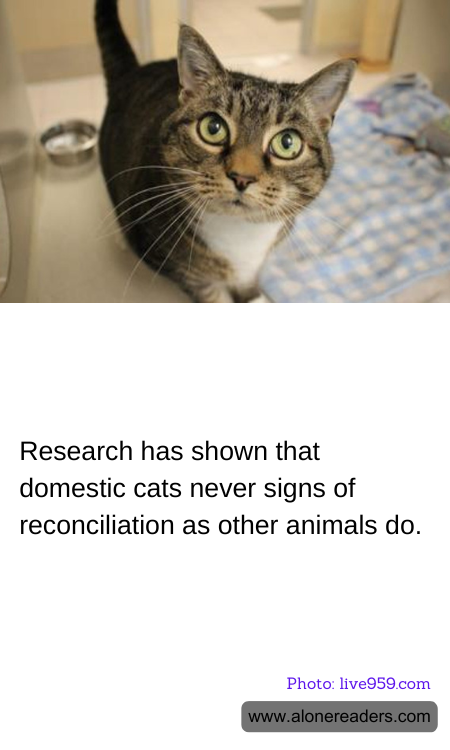
Research into the behaviors of domestic cats has thrown up some interesting findings about how these popular pets handle conflicts with each other. Unlike many social animals, which often exhibit clear reconciliation behaviors after a skirmish or a fight, domestic cats appear to display very few, if any, observable signs of making peace. This has led scientists to speculate about the social structures and communication methods among cats, which differ significantly from those of more overtly social animals like primates and canines.
Cats are generally solitary creatures by nature, their ancestors having lived largely independent lives centered around hunting. This evolutionary history plays a crucial role in how modern domestic cats interact with each other. In the wild, feline conflicts are typically resolved simply by avoiding further encounters, rather than through reconciliatory behaviors. Translating this behavior to a domestic setting, where space is more limited, results in what humans often interpret as grudges or sustained aggression between cats.
Some researchers suggest that indirect methods of reconciliation might exist among cats, such as synchronized activities (like grooming or eating) following an aggressive interaction, or the use of neutral spaces within a home to gradually reintroduce hostile cats to one another peacefully. However, these behaviors are subtle and rarely fit the overt reconciliation patterns observed in species like dogs, where behaviors such as tail wagging, licking, or playful gestures often follow after a conflict.
This lack of reconciliation in cats can sometimes make it challenging for pet owners to manage multi-cat households. Misinterpretations of cat behavior can lead to prolonged conflicts if not managed appropriately with adequate space and resources for each cat. Understanding that lack of reconciliation is normal for cats can help in setting realistic expectations and strategies for dealing with conflicts. For instance, gradual reintroduction techniques and the provision of separate territories within a home can ease tensions over time.
The ongoing study of feline behavior, particularly in domestic settings, continues to reveal the complexity of these creatures, whose communication and social structures confound easy interpretation through the lens of more socially oriented animals. It underscores the importance of tailored approaches to pet care and management that recognize the inherent traits of different animal species.