More About This Card
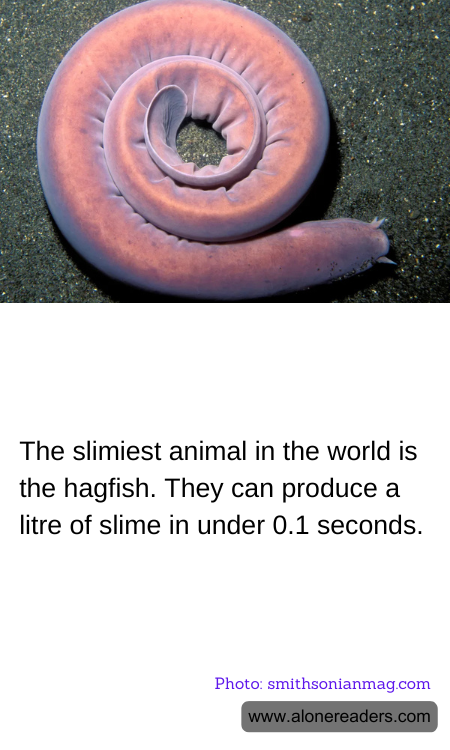
The hagfish, often recognized as the world's slimiest animal, offers a fascinating glimpse into the adaptative capabilities of sea creatures. This eel-shaped, jawless fish dwells primarily in cold ocean waters, lurking at the murky sea floor. One of the most startling features of the hagfish is its ability to produce an incredible amount of slime. When threatened or attacked, the hagfish can exude up to a liter of slime in less than a tenth of a second. This slime is not only abundant but also extraordinary in its properties.
The purpose of this rapid and voluminous slime production is primarily defense. The slime, which is a mix of mucous and protein threads, can clog the gills of predatory fish, such as sharks, discouraging them from pursuing the hagfish further. Remarkably, the hagfish itself does not suffer from its own slime; it has the ability to tie itself into an overhand knot and then pass the knot from one end of its body to the other, effectively scraping off the slime and freeing itself from its own sticky defense mechanism.
But the slime is not just a defense tool; it has piqued the interest of scientists and engineers for its unique viscosity and fiber-like qualities. Research into replicating or harnessing hagfish slime's properties could lead to breakthroughs in materials science. Potential applications include biodegradable, water-based polymers that could replace synthetic plastics in many contexts, or exceptionally strong yet lightweight fibers for use in textiles, medical devices, or even body armor.
Despite their perhaps unappealing appearance and slimy nature, hagfish are cleaners of the ocean, feeding primarily on dead and dying sea creatures. Without hagfish, the ocean floors would be much dirtier, and the cycle of marine life would be less efficient. As researchers continue to explore and understand the unique biological mechanisms of creatures like the hagfish, their findings underscore the depth of innovation present in nature. Such research not only helps in the conservation of these unique species but also informs technological advancement, demonstrating once again how much human innovation owes to the natural world.