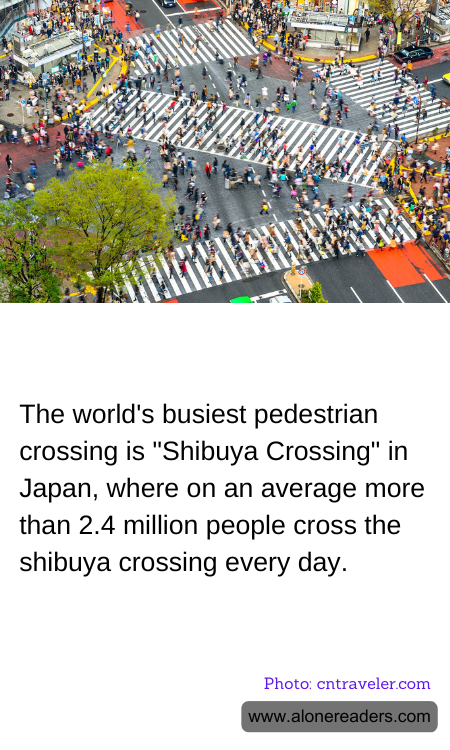
Nestled in the heart of Tokyo, Shibuya Crossing is an iconic symbol of Japan's bustling urban life and the epitome of efficiency in the midst of chaos. Known as "The Scramble," it is perhaps the world’s busiest pedestrian crossing, with over 2.4 million people navigating its pathways daily. This massive influx of pedestrians is a testament to the strategic management and design intricacies that maintain order despite the volume of foot traffic.
Shibuya Crossing is famed not only for its operational scale but also for its cultural significance. It features prominently in international media and has been a backdrop in numerous films, photographs, and television shows that seek to capture the essence of Tokyo's high-energy pace. At peak times, notably during rush hours, the sights and sounds of Shibuya Crossing epitomize the urban experience; thousands of people from all walks of life moving in synchrony, illuminated by the vibrant lights of the surrounding advertisements and buildings.
What makes the crossing particularly remarkable is its 'scramble' layout. Traffic is halted in all directions, allowing pedestrians to flood the entirety of the intersection and cross diagonally as well as laterally. This setup not only facilitates an efficient flow of people but also adds to the overall safety of the area, minimizing potential conflicts between pedestrians and vehicles. The scene at Shibuya Crossing is often likened to a complex dance, where each individual is both an independent entity and a part of a larger choreographed movement.
Technologically, Shibuya Crossing is a marvel as well. Cameras and sensors are strategically placed to manage the flow of pedestrians and traffic. Large electronic screens showcase real-time ads and public information, adding to the dynamism of the environment. The crossing is also a hotspot for promotions and events, further attracting both locals and tourists who add to the daily tally of crossers.
In conclusion, Shibuya Crossing is not just a testament to Tokyo's urban design but also a cultural landmark that offers a window into the disciplined yet dynamic nature of Japanese society. It represents the harmonious blend of tradition and modernity that characterizes much of Japan — a perfect metaphor for the country itself in the way it handles the immense flow of people with precision and grace. As urban areas around the world grow more congested, Shibuya Crossing remains a remarkable example of efficient urban planning and crowd management, worthy of both admiration and study.
