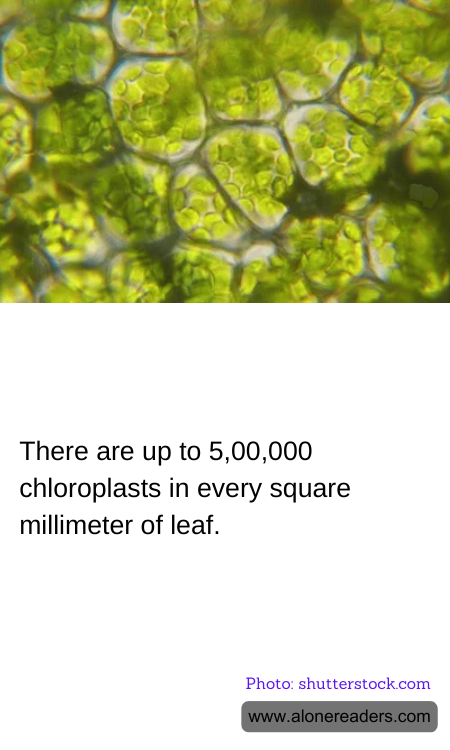
Leaves are the powerhouses of plants, playing a crucial role in photosynthesis, the process by which plants convert light energy into chemical energy. At the heart of this process are chloroplasts, tiny organelles located within the cells of leaves and other green plant tissues. Remarkably, each square millimeter of a leaf can contain up to 500,000 chloroplasts, illustrating just how machinery-rich these vital components of plant life are.
Chloroplasts are equipped with chlorophyll, the green pigment that gives plants their color and is critical for absorbing sunlight. The density of chloroplasts within the leaf is a testament to their importance in capturing as much light as possible. Each chloroplast contains a system of internal membranes, where the energy from sunlight is converted through a series of chemical reactions into a form of chemical energy that plants can use to grow, reproduce, and perform other vital functions.
The sheer number of chloroplasts in such a compact area underscores the efficiency and high capacity of leaves for energy conversion. This density is not uniform and can vary among different plant species, types of leaves, and even environmental conditions. Factors such as light exposure, water and nutrient availability can influence the number and functionality of chloroplasts, affecting the overall health and productivity of the plant.
Understanding how chloroplasts work and their distribution in leaves is crucial for areas like agriculture and horticulture. It aids in cultivating crops with higher yields and better resilience against environmental stresses. Furthermore, studies on chloroplast function and efficiency can contribute to efforts in bioengineering, such as developing systems that mimic photosynthesis for sustainable energy solutions.
Indeed, the presence of up to 500,000 chloroplasts per square millimeter of leaf is a finely tuned adaptation developed by plants over millennia, perfecting their ability to harness the sun's energy - a process on which all life on earth depends, directly or indirectly. Such knowledge not only deepens our appreciation of plant biology but also guides us toward innovative approaches to meeting energy demands in an eco-friendly manner.
