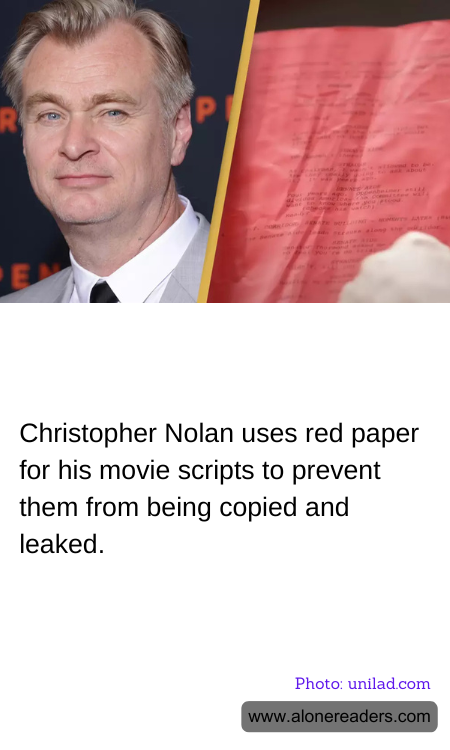
In the world of filmmaking, keeping a script secure is of paramount importance, especially in an era where information leaks are frequent and can cause substantial disruptions to the production process. Christopher Nolan, one of the most influential filmmakers of our time, known for his tightly woven narratives and groundbreaking storytelling techniques, takes the security of his scripts very seriously. To safeguard the confidentiality of his projects, Nolan has adopted a unique method: printing his movie scripts on red paper.
Using red paper to print scripts is a clever tactical move. The bright red color makes it difficult to photocopy the pages. Traditional photocopy machines and scanners typically have a hard time accurately replicating documents printed on red paper. The colored background often distorts the text or causes the copies to come out as unreadable, blurred lines, effectively deterring unauthorized duplication and distribution.
This approach reflects Nolan's meticulous attention to detail and his determination to maintain control over his creative outputs. By securing his scripts in such an innovative manner, Nolan not only protects his intellectual property but also ensures that the plot twists and unique story arcs of his films remain a secret until they are unveiled on the big screen. This strategy helps in preserving the suspense and impact of his movies, elements that are central to his storytelling ethos.
Moreover, the use of red paper for scripts is also indicative of the rigorous procedures often employed in major film productions to curb the leakage of sensitive content. It's a practice that underscores the challenges faced by filmmakers in protecting their vision during the increasingly complex phases of movie production and promotion. While the method may seem simple, its adoption by a director as esteemed as Christopher Nolan highlights its effectiveness.
In summary, Christopher Nolan's preference for printing scripts on red paper is more than just a quirky personal choice. It is a practical, security-enhanced measure that helps to shield his artistic visions from being compromised. As the film industry continues to evolve, perhaps more directors will adopt similar creative methods to guard their projects, inspired by Nolan's example. These efforts to maintain secrecy not only enhance the security of sensitive materials but also add an extra layer of excitement and intrigue around a film's release, keeping audiences eagerly anticipating the magic that will unfold in theaters.
