More About This Card
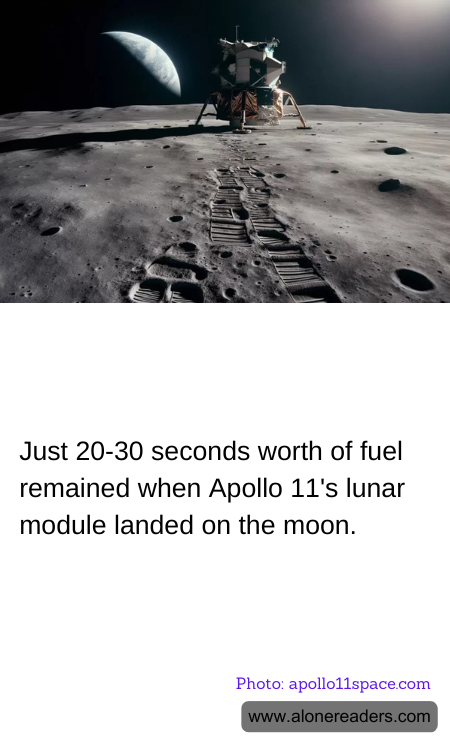
When Apollo 11 made its historic moon landing on July 20, 1969, it did so with a perilously low fuel reserve—just 20 to 30 seconds’ worth of fuel remained when the Lunar Module, Eagle, touched down on the lunar surface. This close call was due to several factors, including longer-than-expected times to descend and navigate over the moon’s rough terrain, unforeseen in simulations. Neil Armstrong, manually piloting the Eagle, had to take control from the module’s autopilot to avoid a boulder-strewn area, finding a safer spot to land in the Sea of Tranquility. This unforeseen manual maneuvering caused the lunar module to consume more fuel. Despite the high tension and tight fuel constraints, the landing was executed flawlessly, allowing Armstrong to famously declare, "Houston, Tranquility Base here. The Eagle has landed,” marking a monumental achievement in space exploration. Armstrong and Buzz Aldrin then spent about 21 hours on the moon’s surface, collecting data and samples, before rejoining Michael Collins aboard the Command Module in lunar orbit, bringing back to Earth vital information and insights that have continued to benefit space science and exploration.